Gorilla Tag Summary
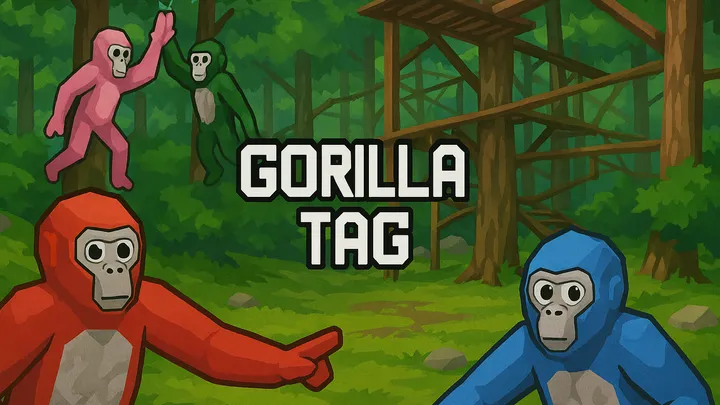
When Gorilla Tag was first released by developer Another Axiom in early access back in early 2021, few could have predicted the meteoric rise it would enjoy. The concept was almost childishly simple: you play as a gorilla in VR, using only your arms to move, jump, and climb, and the core game mode is… tag. That’s it. No complicated weapon systems. No sprawling maps with scripted events. No ultra-realistic graphics or heavy lore drops. Instead, it’s an unapologetically low-poly, physics-driven playground where movement is the mechanic.And yet, this stripped-down design has transformed Gorilla Tag from an experimental indie project into one of the most popular VR multiplayer games of all time. It’s a case study in how constraints can inspire innovation — and how social interaction, player creativity, and unconventional mechanics can create a phenomenon that defies traditional AAA wisdom.In this review, I’ll dissect Gorilla Tag from the perspective of a games analyst, covering its movement system, game design philosophy, social dynamics, competitive meta, community growth, technical execution, monetization strategy, and the future potential of the title. I’ll also touch on its cultural footprint and what it means for the VR industry as a whole.
Rating
The Core Mechanic – Arm-Driven Locomotion and Why It Works
1. Movement as the Game The first thing any newcomer notices about Gorilla Tag is its unique locomotion system. Instead of thumbsticks or teleportation — the two most common VR movement paradigms — you move by physically swinging your arms in a gorilla-like motion. Push against the ground, pull yourself along walls, and leap from branch to branch. This design is both the game’s most defining feature and its biggest learning curve.
From a human-computer interaction standpoint, Gorilla Tag’s locomotion achieves three crucial things:
- Immersion – You truly feel like you are inhabiting the body of a gorilla, not just controlling an avatar.
- Engagement – Physical exertion is inherently more stimulating than joystick input. It’s exercise disguised as play.
- Skill Depth – Mastery takes time. Players can develop advanced techniques like “wall running” or “branch swinging,” leading to a high skill ceiling.
2. Physicality and Presence In VR, physical motion often amplifies the sense of “presence” — that elusive feeling of truly being somewhere else. By forcing the player to use their own body to traverse the world, Gorilla Tag creates an unmatched kinesthetic connection to the environment. This is the same reason rock-climbing gyms feel addictive: movement and environment become one.
3. Accessibility vs. Physical Demands While the system is immersive, it’s not universally accessible. It demands physical energy and coordination, which may alienate players with mobility limitations. The devs have mitigated this somewhat with comfort options, but it remains a physically intensive game.
Game Modes – Simplicity Breeds Depth
1. Tag The default mode, and still the most popular, is classic tag: one player is “it” (infected), and must chase and tag others to spread infection. The last untagged player wins. It’s playground logic brought into VR, and it works precisely because everyone already knows the rules.
2. Infection Variants Variants like Lava Mode add environmental danger, where the floor is “lava” and you must climb to survive. These are essentially small twists on the base rules, but they dramatically shift strategies.
3. Player-Created Games Interestingly, some of Gorilla Tag’s most enduring game modes aren’t official. Players invent their own rules — from “Monkey on the Shelf” to “Ghost in the Graveyard” — and enforce them socially. This emergent design keeps the game fresh without official content drops.
Level Design – Verticality and Readability
1. Maps The maps in Gorilla Tag are deliberately simple and stylized, but they are masterclasses in vertical level design. Trees, cliffs, buildings, and obstacle layouts all encourage climbing, jumping, and chasing in 3D space. There’s no aimless flat terrain: every inch of the map is designed to facilitate locomotion flow.
2. Readability In a fast-paced, first-person VR game, visual readability is critical. Gorilla Tag achieves this through:
- Bold colors to distinguish surfaces.
- Minimal clutter to reduce visual noise.
- Recognizable silhouettes for key climbable structures.
The Social Layer – Why Gorilla Tag Feels Alive
If Gorilla Tag were purely about movement mechanics, it might have remained a niche curiosity. What turned it into a phenomenon was its social dynamics.
1. Unscripted Interactions Because voice chat is always on in public lobbies, every session is filled with real, unfiltered human interaction. This creates unpredictable, emergent social moments that can be hilarious, chaotic, or surprisingly wholesome.
2. Youthful Demographics A significant portion of the player base is under 18. This has both upsides (high energy, rapid meta evolution) and downsides (occasional toxicity, moderation challenges). But from a growth perspective, younger players’ enthusiasm has been rocket fuel.
3. The “Playground” Analogy Unlike competitive shooters or score-driven games, Gorilla Tag feels like recess at school: a place to hang out, make up games, and burn off energy. This low-pressure environment is key to its retention.
Competitive Play and Skill Meta
Although Gorilla Tag wasn’t designed as an esports title, a competitive subculture has emerged. Players train in:
- Route optimization – Finding the fastest paths across maps.
- Advanced climbing – Scaling walls in seconds.
- Movement mind games – Faking direction changes to evade tags.
This “parkour meta” gives the game surprising depth. Top players move with such speed and precision that watching high-level play feels closer to a Spider-Man simulator than playground tag.
Technical Execution – Low-Poly but High-Performance
One of Gorilla Tag’s secret weapons is its low system requirements. By using minimalist visuals, the game:
- Runs smoothly on the standalone Meta Quest headsets.
- Supports large lobbies without performance dips.
- Keeps bandwidth low for networked play.
In VR, frame rate is king for comfort. A game that runs at 72–90 FPS without stutter dramatically reduces motion sickness risk, which is crucial for a physical locomotion title.
Monetization and Business Model
Originally free, Gorilla Tag adopted a cosmetics-driven monetization model:
- Skins, hats, and accessories for your gorilla.
- Seasonal items that create FOMO cycles.
- A small in-game currency economy.
Notably, none of these affect gameplay. This preserves fairness while giving invested players a way to express individuality — and, for the developer, creates recurring revenue without alienating the audience.
Cultural Impact and Memes
From YouTube montage culture to TikTok trends, Gorilla Tag has become a meme factory. Its exaggerated arm movements and unfiltered voice chat produce endless viral clips. This organic marketing has been invaluable, driving adoption far more effectively than paid ads.
Risks and Challenges
- Moderation – An open voice chat environment invites harassment risk.
- Physical Barriers – Not everyone can handle the movement demands.
- VR Market Volatility – The game’s success is tied to VR headset adoption.
The Future of Gorilla Tag
The devs have teased new maps, more cosmetics, and ongoing moderation tools. The community is also experimenting with modding (on PC VR) and private lobbies. With VR hardware getting lighter and more affordable, Gorilla Tag is well-positioned to remain a flagship social VR title for years.
Final Verdict
From a purely mechanical perspective, Gorilla Tag is an anomaly: a bare-bones game with no formal progression system that has nonetheless become a massive hit. From an industry perspective, it’s a reminder that in emerging mediums like VR, movement, presence, and social connection can outweigh graphical fidelity or complex systems.
If you want to understand the future of VR multiplayer, you should be watching Gorilla Tag. Not because it’s the most advanced game — but because it might be the most VR game on the market today.
Get Game Links
All trademarks belong to their respective owners.
Latest Reviews
Gorilla Tag
When Gorilla Tag was first released by developer Another Axiom in early access back in early 2021, few could have predicted the meteoric rise it would enjoy. The concept was almost childishly simple: you play as a gorilla in VR, using only your arms to move, jump, and climb, and the core game mode is… tag. That’s it. No complicated weapon systems. No sprawling maps with scripted events. No ultra-realistic graphics or heavy lore drops. Instead, it’s an unapologetically low-poly, physics-driven playground where movement is the mechanic.And yet, this stripped-down design has transformed Gorilla Tag from an experimental indie project into one of the most popular VR multiplayer games of all time. It’s a case study in how constraints can inspire innovation — and how social interaction, player creativity, and unconventional mechanics can create a phenomenon that defies traditional AAA wisdom.In this review, I’ll dissect Gorilla Tag from the perspective of a games analyst, covering its movement system, game design philosophy, social dynamics, competitive meta, community growth, technical execution, monetization strategy, and the future potential of the title. I’ll also touch on its cultural footprint and what it means for the VR industry as a whole.

Bloody Finger Jump
Is your finger faster then the others? Will your finger crush other enemies? Take up the challenge, compete and check how fast your fingers are. You can be sure that there will be blood...
Grand Theft Auto V
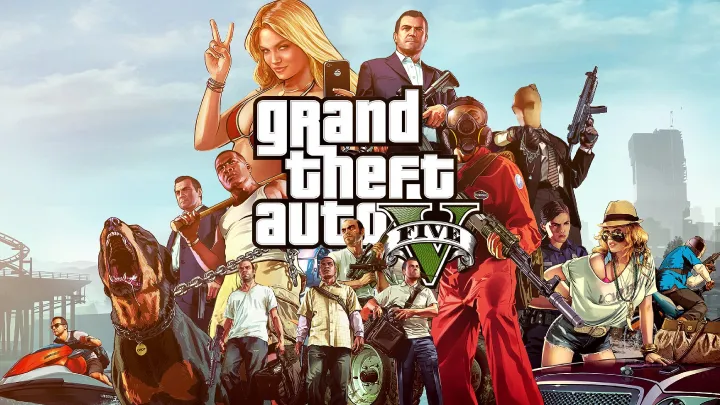
Grand Theft Auto V isn't simply a game; it is an economic, social, and cultural document of the 21st century. Taking the familiar chaotic sandbox of its predecessors, it expands it into a living, breathing world of San Andreas—teeming with meticulous detail and a biting, satirical wit. Whether you are pulled into its high-stakes criminal economy or its deep social simulation, GTA V delivers a profound and unforgettable masterclass in open-world design.

EA SPORTS FC™ 26
EA SPORTS FC™ 26 marks the third installment in the EA Sports FC era and is poised for release in September 2025. Developed by EA Vancouver and EA Romania, the game continues to showcase realism, player expression, and fidelity that fans expect—now with deeper gameplay variety and tactical richness. Covering multiple platforms—from next-gen consoles to PCs and even the new Nintendo Switch 2—FC 26 seeks to refine core mechanics while layering in strategic and narrative depth.
My Voice Zoo
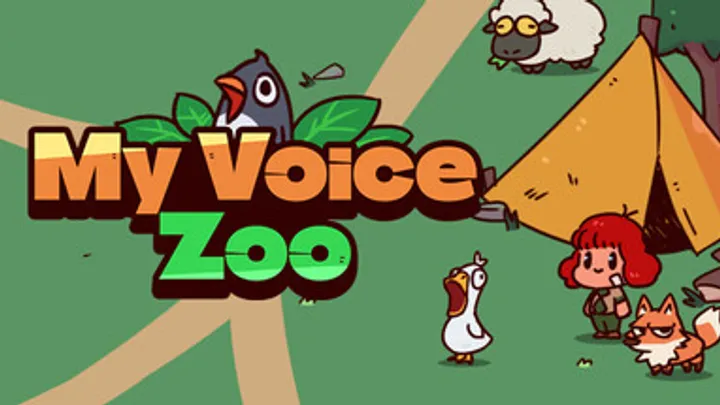
MyVoiceZoo is a voice-focused platform/app designed to help users work with audio and voice-related tasks in a convenient, easy-to-use way. Instead of making everything complicated, MyVoiceZoo typically follows a simple workflow where users can get results faster, adjust key options, and reuse the tool for different voice needs. If you’re searching for a voice tool that feels practical and customization-friendly, MyVoiceZoo is worth considering.