Screenshot





























Summary
IntroductionReleased in September 2022 by EA Sports, FIFA 23 marked the end of a 30-year partnership between EA and FIFA, closing an era in football gaming. As the final entry under the FIFA brand, the game aimed to deliver a culmination of features, technical polish, and cross-platform connectivity, while also setting the stage for EA’s rebranded future.From an industry analyst’s perspective, FIFA 23 is both a refinement of a mature franchise and a commercial juggernaut driven by its live-service mode — FIFA Ultimate Team (FUT). It’s a case study in balancing annualized sports releases with evolving technology and monetization models.1. Core Gameplay EnhancementsWhile FIFA traditionally builds on incremental changes, FIFA 23 introduced notable refinements:HyperMotion2 TechnologyCaptured via advanced motion capture from 11v11 real matches.More natural animations, player movements, and collision physics.Particularly impactful on next-gen consoles and high-end PCs.Women’s Football ExpansionFull women’s club teams for the first time (WSL, D1 Arkema), alongside international teams.Improved animations tailored to women’s player models.Improved PhysicsMore realistic ball trajectory, bounces, and spin.Enhanced player momentum for weightier, grounded play.Gameplay pacing in FIFA 23 tends to be slightly slower and more physical, rewarding build-up play over constant sprinting.2. Modes OverviewFIFA 23 retains the full suite of game modes:FIFA Ultimate Team (FUT) – The flagship live-service mode, built around squad building, online matches, and a card-collecting economy.Career Mode – Player and manager careers with cutscenes, transfer negotiations, and more customization.Pro Clubs – Create and develop a player to compete with friends in 11v11.Volta Football – Arcade-style street football with cosmetic customization.Kick-Off / Tournament – Traditional quick-play options.The depth is there, but FUT continues to dominate player engagement and monetization.3. FIFA Ultimate Team (FUT) AnalysisFUT is both FIFA’s greatest strength and its most controversial feature:Squad Building – Players acquire cards through packs, transfers, or objectives.Chemistry System Overhaul – New system allows more flexible team-building across leagues and nations.Live Content – Weekly promos, Team of the Week (TOTW), and themed events drive engagement.Monetization – Pack purchases remain a major revenue driver, raising ongoing debates about loot box ethics and gambling mechanics.From a business lens, FUT is a high-retention, high-revenue live-service model comparable to gacha systems in mobile games.4. Cross-Play and ConnectivityFor the first time in the series:Cross-Play – Available for 1v1 modes (FUT, Online Seasons) across same-generation platforms (PS5, Xbox Series X|S, PC).Shared Transfer Market – FUT economy is now unified across major platforms.This move improves matchmaking speed, market liquidity, and player community integration.5. Presentation and AuthenticityFIFA 23 maintains its reputation for best-in-class broadcast presentation:Licensing – Over 19,000 players, 700+ teams, 100 stadiums, and 30+ leagues.Broadcast Packages – Authentic overlays, commentary, and crowd atmosphere.Dynamic Matchday – Weather, crowd reactions, and stadium-specific details enhance immersion.EA’s licensing portfolio remains unmatched, a competitive moat over rivals like eFootball.6. Player Movement and TacticsTactical depth improved with:Customizable Tactical Plans – Multiple setups stored for quick changes mid-match.More Defensive AI Discipline – Positioning feels less chaotic, though some players feel defense is too passive without manual control.Accelerate System – Divides player sprint animations into Archetypes (Controlled, Lengthy, Explosive) — impacting meta team-building in FUT.The result is a meta where physicality and pace balance differently than in previous years.7. Women’s Football IntegrationFIFA 23 made a genuine leap here:Club Teams – Fully licensed Barclays Women’s Super League and Division 1 Féminine.Tailored Motion Capture – More realistic animations for women’s play.World Cup Modes – Both men’s and women’s World Cups as free updates.This expansion reflects wider industry trends towards inclusivity.8. Criticisms and Pain PointsDespite its polish, FIFA 23 is not without flaws:FUT Monetization Controversy – Loot box mechanics remain under scrutiny by regulators.Legacy Issues – Some animation glitches, input delays, and refereeing inconsistencies persist.Volta Football – Lacks depth compared to its debut, feels under-supported.Annual Release Fatigue – Incremental updates can feel like paid patches to long-time players.9. Competitive LandscapeKey competitors include:eFootball (Konami) – Fully free-to-play, focusing on realism but struggling with content breadth.UFL – Upcoming F2P football sim aiming to disrupt the market.Mobile Football Games – EA also competes with its own FIFA Mobile in emerging markets.FIFA’s competitive advantage remains licensing dominance, FUT’s player base, and presentation quality.10. Future OutlookWith FIFA 23 closing the chapter on the FIFA brand, EA’s focus shifts to:EA Sports FC 24 – The rebranded successor, building on FIFA 23’s engine and tech.Enhanced Cross-Platform – Likely to expand beyond 1v1 to modes like Pro Clubs.Evolving Monetization – Potential adaptations in response to loot box regulation.Women’s Football Growth – More leagues, deeper integration in Career Mode.Given FUT’s revenue power, expect live-service elements to grow even further.ConclusionFrom an industry perspective, FIFA 23 is the most feature-complete and polished entry in the series to date, leveraging advanced motion capture, cross-play, and expanded representation to deliver a high-quality football simulation.It doesn’t reinvent the formula, but as the final “FIFA”, it serves as both a commercial and technical milestone, setting a clear foundation for the EA Sports FC era.Final Verdict: FIFA 23 is not just the end of an era — it’s a confident send-off that consolidates EA’s football dominance while signaling the future of connected, live-service sports gaming.
Rating
Introduction
Released in September 2022 by EA Sports, FIFA 23 marked the end of a 30-year partnership between EA and FIFA, closing an era in football gaming. As the final entry under the FIFA brand, the game aimed to deliver a culmination of features, technical polish, and cross-platform connectivity, while also setting the stage for EA’s rebranded future.
From an industry analyst’s perspective, FIFA 23 is both a refinement of a mature franchise and a commercial juggernaut driven by its live-service mode — FIFA Ultimate Team (FUT). It’s a case study in balancing annualized sports releases with evolving technology and monetization models.
1. Core Gameplay Enhancements
While FIFA traditionally builds on incremental changes, FIFA 23 introduced notable refinements:
- HyperMotion2 Technology
- Captured via advanced motion capture from 11v11 real matches.
- More natural animations, player movements, and collision physics.
- Particularly impactful on next-gen consoles and high-end PCs.
- Women’s Football Expansion
- Full women’s club teams for the first time (WSL, D1 Arkema), alongside international teams.
- Improved animations tailored to women’s player models.
- Improved Physics
- More realistic ball trajectory, bounces, and spin.
- Enhanced player momentum for weightier, grounded play.
Gameplay pacing in FIFA 23 tends to be slightly slower and more physical, rewarding build-up play over constant sprinting.
2. Modes Overview
FIFA 23 retains the full suite of game modes:
- FIFA Ultimate Team (FUT) – The flagship live-service mode, built around squad building, online matches, and a card-collecting economy.
- Career Mode – Player and manager careers with cutscenes, transfer negotiations, and more customization.
- Pro Clubs – Create and develop a player to compete with friends in 11v11.
- Volta Football – Arcade-style street football with cosmetic customization.
- Kick-Off / Tournament – Traditional quick-play options.
The depth is there, but FUT continues to dominate player engagement and monetization.
3. FIFA Ultimate Team (FUT) Analysis
FUT is both FIFA’s greatest strength and its most controversial feature:
- Squad Building – Players acquire cards through packs, transfers, or objectives.
- Chemistry System Overhaul – New system allows more flexible team-building across leagues and nations.
- Live Content – Weekly promos, Team of the Week (TOTW), and themed events drive engagement.
- Monetization – Pack purchases remain a major revenue driver, raising ongoing debates about loot box ethics and gambling mechanics.
From a business lens, FUT is a high-retention, high-revenue live-service model comparable to gacha systems in mobile games.
4. Cross-Play and Connectivity
For the first time in the series:
- Cross-Play – Available for 1v1 modes (FUT, Online Seasons) across same-generation platforms (PS5, Xbox Series X|S, PC).
- Shared Transfer Market – FUT economy is now unified across major platforms.
This move improves matchmaking speed, market liquidity, and player community integration.
5. Presentation and Authenticity
FIFA 23 maintains its reputation for best-in-class broadcast presentation:
- Licensing – Over 19,000 players, 700+ teams, 100 stadiums, and 30+ leagues.
- Broadcast Packages – Authentic overlays, commentary, and crowd atmosphere.
- Dynamic Matchday – Weather, crowd reactions, and stadium-specific details enhance immersion.
EA’s licensing portfolio remains unmatched, a competitive moat over rivals like eFootball.
6. Player Movement and Tactics
Tactical depth improved with:
- Customizable Tactical Plans – Multiple setups stored for quick changes mid-match.
- More Defensive AI Discipline – Positioning feels less chaotic, though some players feel defense is too passive without manual control.
- Accelerate System – Divides player sprint animations into Archetypes (Controlled, Lengthy, Explosive) — impacting meta team-building in FUT.
The result is a meta where physicality and pace balance differently than in previous years.
7. Women’s Football Integration
FIFA 23 made a genuine leap here:
- Club Teams – Fully licensed Barclays Women’s Super League and Division 1 Féminine.
- Tailored Motion Capture – More realistic animations for women’s play.
- World Cup Modes – Both men’s and women’s World Cups as free updates.
This expansion reflects wider industry trends towards inclusivity.
8. Criticisms and Pain Points
Despite its polish, FIFA 23 is not without flaws:
- FUT Monetization Controversy – Loot box mechanics remain under scrutiny by regulators.
- Legacy Issues – Some animation glitches, input delays, and refereeing inconsistencies persist.
- Volta Football – Lacks depth compared to its debut, feels under-supported.
- Annual Release Fatigue – Incremental updates can feel like paid patches to long-time players.
9. Competitive Landscape
Key competitors include:
- eFootball (Konami) – Fully free-to-play, focusing on realism but struggling with content breadth.
- UFL – Upcoming F2P football sim aiming to disrupt the market.
- Mobile Football Games – EA also competes with its own FIFA Mobile in emerging markets.
FIFA’s competitive advantage remains licensing dominance, FUT’s player base, and presentation quality.
10. Future Outlook
With FIFA 23 closing the chapter on the FIFA brand, EA’s focus shifts to:
- EA Sports FC 24 – The rebranded successor, building on FIFA 23’s engine and tech.
- Enhanced Cross-Platform – Likely to expand beyond 1v1 to modes like Pro Clubs.
- Evolving Monetization – Potential adaptations in response to loot box regulation.
- Women’s Football Growth – More leagues, deeper integration in Career Mode.
Given FUT’s revenue power, expect live-service elements to grow even further.
Conclusion
From an industry perspective, FIFA 23 is the most feature-complete and polished entry in the series to date, leveraging advanced motion capture, cross-play, and expanded representation to deliver a high-quality football simulation.
It doesn’t reinvent the formula, but as the final “FIFA”, it serves as both a commercial and technical milestone, setting a clear foundation for the EA Sports FC era.
Final Verdict: FIFA 23 is not just the end of an era — it’s a confident send-off that consolidates EA’s football dominance while signaling the future of connected, live-service sports gaming.
Get Game Links
All trademarks belong to their respective owners.
Latest Reviews

Gorilla Tag
When Gorilla Tag was first released by developer Another Axiom in early access back in early 2021, few could have predicted the meteoric rise it would enjoy. The concept was almost childishly simple: you play as a gorilla in VR, using only your arms to move, jump, and climb, and the core game mode is… tag. That’s it. No complicated weapon systems. No sprawling maps with scripted events. No ultra-realistic graphics or heavy lore drops. Instead, it’s an unapologetically low-poly, physics-driven playground where movement is the mechanic.And yet, this stripped-down design has transformed Gorilla Tag from an experimental indie project into one of the most popular VR multiplayer games of all time. It’s a case study in how constraints can inspire innovation — and how social interaction, player creativity, and unconventional mechanics can create a phenomenon that defies traditional AAA wisdom.In this review, I’ll dissect Gorilla Tag from the perspective of a games analyst, covering its movement system, game design philosophy, social dynamics, competitive meta, community growth, technical execution, monetization strategy, and the future potential of the title. I’ll also touch on its cultural footprint and what it means for the VR industry as a whole.

Bloody Finger Jump
Is your finger faster then the others? Will your finger crush other enemies? Take up the challenge, compete and check how fast your fingers are. You can be sure that there will be blood...
Grand Theft Auto V
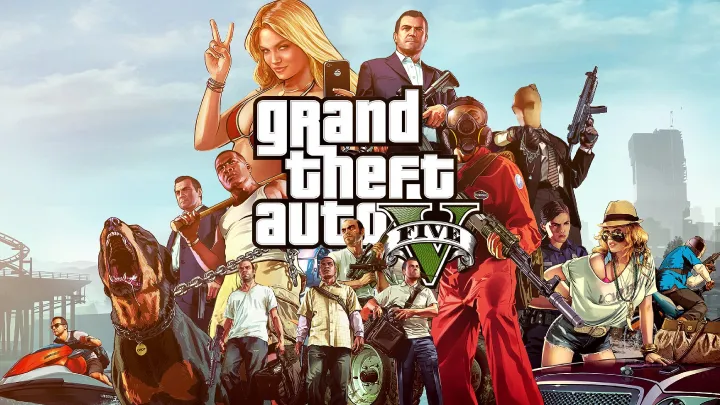
Grand Theft Auto V isn't simply a game; it is an economic, social, and cultural document of the 21st century. Taking the familiar chaotic sandbox of its predecessors, it expands it into a living, breathing world of San Andreas—teeming with meticulous detail and a biting, satirical wit. Whether you are pulled into its high-stakes criminal economy or its deep social simulation, GTA V delivers a profound and unforgettable masterclass in open-world design.
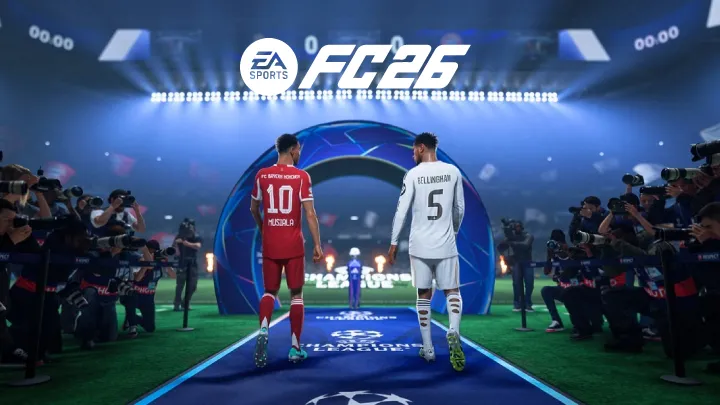
EA SPORTS FC™ 26
EA SPORTS FC™ 26 marks the third installment in the EA Sports FC era and is poised for release in September 2025. Developed by EA Vancouver and EA Romania, the game continues to showcase realism, player expression, and fidelity that fans expect—now with deeper gameplay variety and tactical richness. Covering multiple platforms—from next-gen consoles to PCs and even the new Nintendo Switch 2—FC 26 seeks to refine core mechanics while layering in strategic and narrative depth.
My Voice Zoo
MyVoiceZoo is a voice-focused platform/app designed to help users work with audio and voice-related tasks in a convenient, easy-to-use way. Instead of making everything complicated, MyVoiceZoo typically follows a simple workflow where users can get results faster, adjust key options, and reuse the tool for different voice needs. If you’re searching for a voice tool that feels practical and customization-friendly, MyVoiceZoo is worth considering.