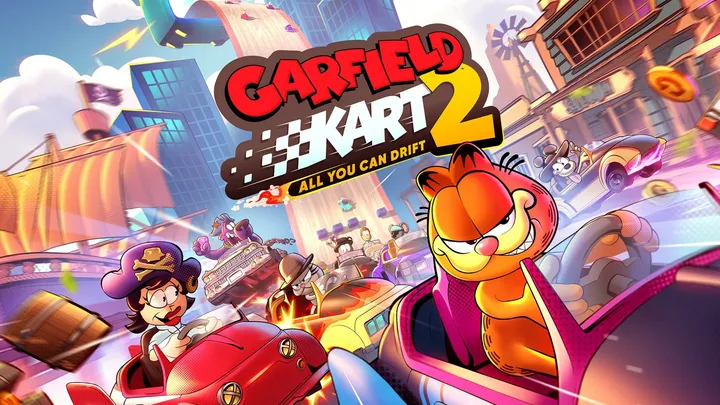
Garfield Kart 2 - All You Can Drift
All trademarks belong to their respective owners.
Screenshot



















Garfield Kart 2 - All You Can Drift Summary
IntroductionGarfield Kart 2: All You Can Drift is a casual kart racing game developed by Eden Games and published by Microids. Released in September 2025, the game continues the Garfield racing formula with arcade-style gameplay, colorful tracks, and familiar characters.While it delivers a lighthearted racing experience suitable for casual players and fans of the Garfield franchise, it struggles to compete with more polished titles in the genre. This review provides a realistic and accurate look at what the game actually offers.Gameplay OverviewAt its core, Garfield Kart 2 follows the standard kart racing formula:Drift around corners to gain speed boostsUse items to attack opponents or defend yourselfTake shortcuts and perform tricks for advantageThe mechanics are clearly inspired by genre leaders like Mario Kart. Players familiar with kart racers will immediately understand how the game works.However, the execution is where things become inconsistent.Driving & ControlsThe driving experience is one of the most critical aspects—and also one of the weakest.Drifting can feel unreliable or inconsistentBoosts sometimes fail to trigger properlyMovement often feels slower and less responsive than expectedIn some cases, players even report the kart drifting in the wrong direction or not granting any speed boost at all.👉 Overall:The gameplay is functional, but lacks the precision and smoothness expected from modern kart racers.Content & Game ModesThe game includes:Around 12 tracks across different themed environments8 playable characters from the Garfield universeSpeed classes like 100cc, 150cc, and mirror modeLocal split-screen (up to 4 players) and online multiplayerWhile this sounds adequate on paper, the actual content is quite limited.You can experience most of the game in a very short time (roughly 1–2 hours)Tracks and gameplay elements start to feel repetitive quicklyReplay value is relatively low👉 Conclusion:The game lacks depth and long-term engagement.Multiplayer ExperienceMultiplayer is one of the stronger aspects—but still far from perfect.Positives:Online races support up to 8 playersLocal multiplayer works well for casual sessionsNegatives:No private lobbiesLimited matchmaking optionsWeak online infrastructure👉 Result:Fun with friends locally, but underwhelming online.Customization & ProgressionPlayers can customize their karts with:WheelsSpoilersCosmetic upgradesWhile customization adds some personality, it is relatively shallow and does not significantly impact gameplay.There is also limited progression, which reduces motivation to keep playing long-term.Graphics & AudioGraphics:Bright, colorful, and cartoon-styleHowever, overall quality feels dated and low-budgetAudio:Soundtrack is decentLack of audio settings (e.g., volume control) is a notable issueTechnical PerformanceThe game suffers from several technical limitations:Slow loading timesOccasional crashesNo control remappingMissing basic quality-of-life featuresThese issues contribute significantly to the overall negative perception of the game.StrengthsEasy to pick up and playFamily-friendly and casualLocal multiplayer can be enjoyableLighthearted Garfield themeWeaknessesUnpolished driving mechanicsVery limited contentWeak online featuresTechnical issues and missing settingsLacks originality and identityFinal VerdictGarfield Kart 2: All You Can Drift is not a terrible game—but it is far from a great one.It delivers a basic kart racing experience that can be enjoyable in short bursts, especially with friends. However, its lack of polish, limited content, and technical shortcomings prevent it from standing out in a competitive genre.Who Should Play This Game?You may enjoy it if:You are a Garfield fanYou want a cheap, casual racing gameYou plan to play locally with friendsYou should skip it if:You want a polished kart racing experienceYou expect deep gameplay or long-term contentYou are comparing it to top-tier titlesConclusionGarfield Kart 2: All You Can Drift is best described as a budget kart racer with some charm but many limitations. It borrows heavily from better games but fails to replicate their quality.For casual fun, it works. For anything more, it falls short.
Rating
Introduction
Garfield Kart 2: All You Can Drift is a casual kart racing game developed by Eden Games and published by Microids. Released in September 2025, the game continues the Garfield racing formula with arcade-style gameplay, colorful tracks, and familiar characters.
While it delivers a lighthearted racing experience suitable for casual players and fans of the Garfield franchise, it struggles to compete with more polished titles in the genre. This review provides a realistic and accurate look at what the game actually offers.
Gameplay Overview
At its core, Garfield Kart 2 follows the standard kart racing formula:
- Drift around corners to gain speed boosts
- Use items to attack opponents or defend yourself
- Take shortcuts and perform tricks for advantage
The mechanics are clearly inspired by genre leaders like Mario Kart. Players familiar with kart racers will immediately understand how the game works.
However, the execution is where things become inconsistent.
Driving & Controls
The driving experience is one of the most critical aspects—and also one of the weakest.
- Drifting can feel unreliable or inconsistent
- Boosts sometimes fail to trigger properly
- Movement often feels slower and less responsive than expected
In some cases, players even report the kart drifting in the wrong direction or not granting any speed boost at all.
👉 Overall:
The gameplay is functional, but lacks the precision and smoothness expected from modern kart racers.
Content & Game Modes
The game includes:
- Around 12 tracks across different themed environments
- 8 playable characters from the Garfield universe
- Speed classes like 100cc, 150cc, and mirror mode
- Local split-screen (up to 4 players) and online multiplayer
While this sounds adequate on paper, the actual content is quite limited.
- You can experience most of the game in a very short time (roughly 1–2 hours)
- Tracks and gameplay elements start to feel repetitive quickly
- Replay value is relatively low
👉 Conclusion:
The game lacks depth and long-term engagement.
Multiplayer Experience
Multiplayer is one of the stronger aspects—but still far from perfect.
Positives:
- Online races support up to 8 players
- Local multiplayer works well for casual sessions
Negatives:
- No private lobbies
- Limited matchmaking options
- Weak online infrastructure
👉 Result:
Fun with friends locally, but underwhelming online.
Customization & Progression
Players can customize their karts with:
- Wheels
- Spoilers
- Cosmetic upgrades
While customization adds some personality, it is relatively shallow and does not significantly impact gameplay.
There is also limited progression, which reduces motivation to keep playing long-term.
Graphics & Audio
Graphics:
- Bright, colorful, and cartoon-style
- However, overall quality feels dated and low-budget
Audio:
- Soundtrack is decent
- Lack of audio settings (e.g., volume control) is a notable issue
Technical Performance
The game suffers from several technical limitations:
- Slow loading times
- Occasional crashes
- No control remapping
- Missing basic quality-of-life features
These issues contribute significantly to the overall negative perception of the game.
Strengths
- Easy to pick up and play
- Family-friendly and casual
- Local multiplayer can be enjoyable
- Lighthearted Garfield theme
Weaknesses
- Unpolished driving mechanics
- Very limited content
- Weak online features
- Technical issues and missing settings
- Lacks originality and identity
Final Verdict
Garfield Kart 2: All You Can Drift is not a terrible game—but it is far from a great one.
It delivers a basic kart racing experience that can be enjoyable in short bursts, especially with friends. However, its lack of polish, limited content, and technical shortcomings prevent it from standing out in a competitive genre.
Who Should Play This Game?
You may enjoy it if:
- You are a Garfield fan
- You want a cheap, casual racing game
- You plan to play locally with friends
You should skip it if:
- You want a polished kart racing experience
- You expect deep gameplay or long-term content
- You are comparing it to top-tier titles
Conclusion
Garfield Kart 2: All You Can Drift is best described as a budget kart racer with some charm but many limitations. It borrows heavily from better games but fails to replicate their quality.
For casual fun, it works. For anything more, it falls short.
Get Game Links
All trademarks belong to their respective owners.
Latest Reviews
Gorilla Tag
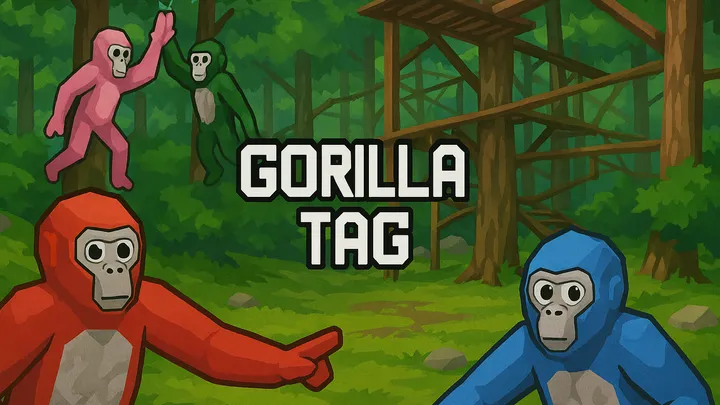
When Gorilla Tag was first released by developer Another Axiom in early access back in early 2021, few could have predicted the meteoric rise it would enjoy. The concept was almost childishly simple: you play as a gorilla in VR, using only your arms to move, jump, and climb, and the core game mode is… tag. That’s it. No complicated weapon systems. No sprawling maps with scripted events. No ultra-realistic graphics or heavy lore drops. Instead, it’s an unapologetically low-poly, physics-driven playground where movement is the mechanic.And yet, this stripped-down design has transformed Gorilla Tag from an experimental indie project into one of the most popular VR multiplayer games of all time. It’s a case study in how constraints can inspire innovation — and how social interaction, player creativity, and unconventional mechanics can create a phenomenon that defies traditional AAA wisdom.In this review, I’ll dissect Gorilla Tag from the perspective of a games analyst, covering its movement system, game design philosophy, social dynamics, competitive meta, community growth, technical execution, monetization strategy, and the future potential of the title. I’ll also touch on its cultural footprint and what it means for the VR industry as a whole.

Bloody Finger Jump
Is your finger faster then the others? Will your finger crush other enemies? Take up the challenge, compete and check how fast your fingers are. You can be sure that there will be blood...
Grand Theft Auto V
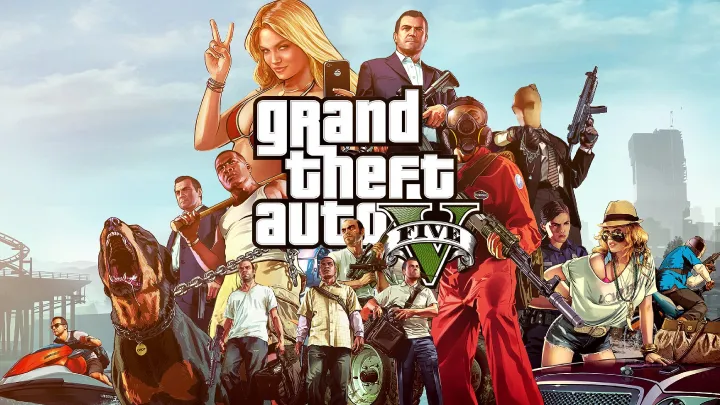
Grand Theft Auto V isn't simply a game; it is an economic, social, and cultural document of the 21st century. Taking the familiar chaotic sandbox of its predecessors, it expands it into a living, breathing world of San Andreas—teeming with meticulous detail and a biting, satirical wit. Whether you are pulled into its high-stakes criminal economy or its deep social simulation, GTA V delivers a profound and unforgettable masterclass in open-world design.
EA SPORTS FC™ 26
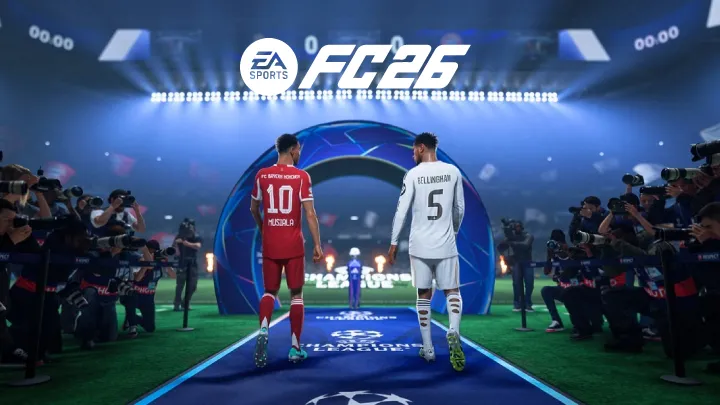
EA SPORTS FC™ 26 marks the third installment in the EA Sports FC era and is poised for release in September 2025. Developed by EA Vancouver and EA Romania, the game continues to showcase realism, player expression, and fidelity that fans expect—now with deeper gameplay variety and tactical richness. Covering multiple platforms—from next-gen consoles to PCs and even the new Nintendo Switch 2—FC 26 seeks to refine core mechanics while layering in strategic and narrative depth.
My Voice Zoo
MyVoiceZoo is a voice-focused platform/app designed to help users work with audio and voice-related tasks in a convenient, easy-to-use way. Instead of making everything complicated, MyVoiceZoo typically follows a simple workflow where users can get results faster, adjust key options, and reuse the tool for different voice needs. If you’re searching for a voice tool that feels practical and customization-friendly, MyVoiceZoo is worth considering.