Screenshot




























Summary
IntroductionRematch is a fresh take on football (soccer) gaming by Sloclap—developers known for Sifu and Absolver. Released in June 2025 across PC, PlayStation 5, and Xbox Series X/S, it reimagines the sport as fast-paced, arcade-style action where you control one player in third-person. The game challenges traditional football titles by emphasizing raw skill, seamless transitions between roles, and tactical improvisation, all without traditional rules like offsides or fouls.Core Gameplay & DesignOne-Player Control, Full Team Flow: You control a single athlete and can switch fluidly between attacking, defending, or even assuming goalkeeping responsibilities. This radical design shifts the focus to personal responsibility and split-second positioning.No Rulebook — Only Skill: The game strips away fouls, offsides, throw-ins, and downtime. It's continuous, chaotic, and demands precision: you must aim your passes and shots manually, punish hesitation, and think two moves ahead.Modes at Launch: Includes 3v3, 4v4, 5v5, and 5v5 ranked. Offline AI play is expected in a future update.Presentation & Visual IdentityArcade Polish with Weight Behind Every Move: Rematch is stunningly animated—ball kicks reverberate, turf blades blur under footwork, and arenas are ruthlessly kinetic, reminiscent of Super Mega Baseball in exuberance.Visual Clarity Meets Creative Flair: Character design and vibrant arenas (sometimes shifting dynamically mid-match) make every play feel cinematic.Skill-Centric MechanicsDeliberate Inputs, High Skill Ceiling: Every tackle, pass, and shot requires timing and precision. There’s no auto-aim or magnetism; if you don’t deliver perfectly, you’ll feel the price immediately.Tactical Fluidity Over Automation: Unlike FIFA or EA Sports FC, Rematch relies on human reading rather than pre-predicted AI positioning.Rewarding Mastery: Players frequently note that while the learning curve is steep, the payoff—especially in coordinated team play—is deeply satisfying.StrengthsUnique Concept — A refreshing departure from mainstream football sims.High Skill Ceiling — Engages both casual and competitive players through its precision mechanics.Fluid, Forgiving Combat Loop — Smooth role transitions keep gameplay lively and tactical.Strong Visual Design — Stylish, kinetic presentation reinforces the arcade feel.No True Alternative — The creative director believes Rematch fills a gap nobody else covers, giving it unique retention potential.Challenges & Current LimitationsTechnical Hurdles: Players report hit registration delays, odd ball physics (e.g., “keeper rolls” that falsely register as goals), crashes, and desync issues.Lack of Cross-Platform Play at Launch: Crossplay wasn't ready at release, split communities across platforms, and continues to be a sore point among fans.Sparse Content Offering: As a paid release at launch, Rematch lacks single-player modes, bot matches, and has limited online variety compared to free-to-play alternatives.Mixed Early Reception: While overall reviews are positive, recent feedback has shifted to mixed, especially due to the unresolved technical and content concerns.Community & Competitive OutlookRising Competitive Buzz: Reviewers liken Rematch to “Rocket League with humans,” praising its competitive viability and broadcast potential.Tactical Depth Over Flash: Sloclap—and many players—insist the game rewards smarter decisions, not flashy mechanics.Community Feedback Loop: The developer has been receptive, applying rapid fixes and updates to address desyncs and glitches.ConclusionRematch is a bold and innovative redefinition of football gaming—part arcade speed, part tactical depth. Its strengths lie in its fluid design, rewarding skill ceiling, and distinctive vision. However, its early phase is marred by technical hiccups, a lack of crossplay, and limited mode availability, all of which dampen its initial momentum.
Rating
Introduction
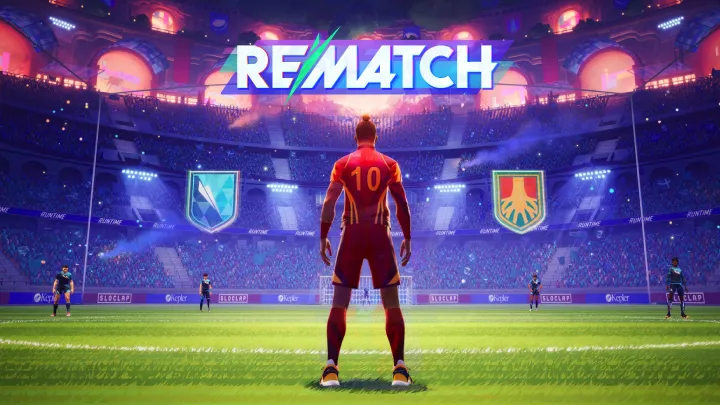
Rematch is a fresh take on football (soccer) gaming by Sloclap—developers known for Sifu and Absolver. Released in June 2025 across PC, PlayStation 5, and Xbox Series X/S, it reimagines the sport as fast-paced, arcade-style action where you control one player in third-person. The game challenges traditional football titles by emphasizing raw skill, seamless transitions between roles, and tactical improvisation, all without traditional rules like offsides or fouls.
Core Gameplay & Design
- One-Player Control, Full Team Flow: You control a single athlete and can switch fluidly between attacking, defending, or even assuming goalkeeping responsibilities. This radical design shifts the focus to personal responsibility and split-second positioning.
- No Rulebook — Only Skill: The game strips away fouls, offsides, throw-ins, and downtime. It's continuous, chaotic, and demands precision: you must aim your passes and shots manually, punish hesitation, and think two moves ahead.
- Modes at Launch: Includes 3v3, 4v4, 5v5, and 5v5 ranked. Offline AI play is expected in a future update.
Presentation & Visual Identity
- Arcade Polish with Weight Behind Every Move: Rematch is stunningly animated—ball kicks reverberate, turf blades blur under footwork, and arenas are ruthlessly kinetic, reminiscent of Super Mega Baseball in exuberance.
- Visual Clarity Meets Creative Flair: Character design and vibrant arenas (sometimes shifting dynamically mid-match) make every play feel cinematic.
Skill-Centric Mechanics
- Deliberate Inputs, High Skill Ceiling: Every tackle, pass, and shot requires timing and precision. There’s no auto-aim or magnetism; if you don’t deliver perfectly, you’ll feel the price immediately.
- Tactical Fluidity Over Automation: Unlike FIFA or EA Sports FC, Rematch relies on human reading rather than pre-predicted AI positioning.
- Rewarding Mastery: Players frequently note that while the learning curve is steep, the payoff—especially in coordinated team play—is deeply satisfying.
Strengths
- Unique Concept — A refreshing departure from mainstream football sims.
- High Skill Ceiling — Engages both casual and competitive players through its precision mechanics.
- Fluid, Forgiving Combat Loop — Smooth role transitions keep gameplay lively and tactical.
- Strong Visual Design — Stylish, kinetic presentation reinforces the arcade feel.
- No True Alternative — The creative director believes Rematch fills a gap nobody else covers, giving it unique retention potential.
Challenges & Current Limitations
- Technical Hurdles: Players report hit registration delays, odd ball physics (e.g., “keeper rolls” that falsely register as goals), crashes, and desync issues.
- Lack of Cross-Platform Play at Launch: Crossplay wasn't ready at release, split communities across platforms, and continues to be a sore point among fans.
- Sparse Content Offering: As a paid release at launch, Rematch lacks single-player modes, bot matches, and has limited online variety compared to free-to-play alternatives.
- Mixed Early Reception: While overall reviews are positive, recent feedback has shifted to mixed, especially due to the unresolved technical and content concerns.
Community & Competitive Outlook
- Rising Competitive Buzz: Reviewers liken Rematch to “Rocket League with humans,” praising its competitive viability and broadcast potential.
- Tactical Depth Over Flash: Sloclap—and many players—insist the game rewards smarter decisions, not flashy mechanics.
- Community Feedback Loop: The developer has been receptive, applying rapid fixes and updates to address desyncs and glitches.
Conclusion
Rematch is a bold and innovative redefinition of football gaming—part arcade speed, part tactical depth. Its strengths lie in its fluid design, rewarding skill ceiling, and distinctive vision. However, its early phase is marred by technical hiccups, a lack of crossplay, and limited mode availability, all of which dampen its initial momentum.
Get Game Links
All trademarks belong to their respective owners.
Latest Reviews

Gorilla Tag
When Gorilla Tag was first released by developer Another Axiom in early access back in early 2021, few could have predicted the meteoric rise it would enjoy. The concept was almost childishly simple: you play as a gorilla in VR, using only your arms to move, jump, and climb, and the core game mode is… tag. That’s it. No complicated weapon systems. No sprawling maps with scripted events. No ultra-realistic graphics or heavy lore drops. Instead, it’s an unapologetically low-poly, physics-driven playground where movement is the mechanic.And yet, this stripped-down design has transformed Gorilla Tag from an experimental indie project into one of the most popular VR multiplayer games of all time. It’s a case study in how constraints can inspire innovation — and how social interaction, player creativity, and unconventional mechanics can create a phenomenon that defies traditional AAA wisdom.In this review, I’ll dissect Gorilla Tag from the perspective of a games analyst, covering its movement system, game design philosophy, social dynamics, competitive meta, community growth, technical execution, monetization strategy, and the future potential of the title. I’ll also touch on its cultural footprint and what it means for the VR industry as a whole.

Bloody Finger Jump
Is your finger faster then the others? Will your finger crush other enemies? Take up the challenge, compete and check how fast your fingers are. You can be sure that there will be blood...
Grand Theft Auto V
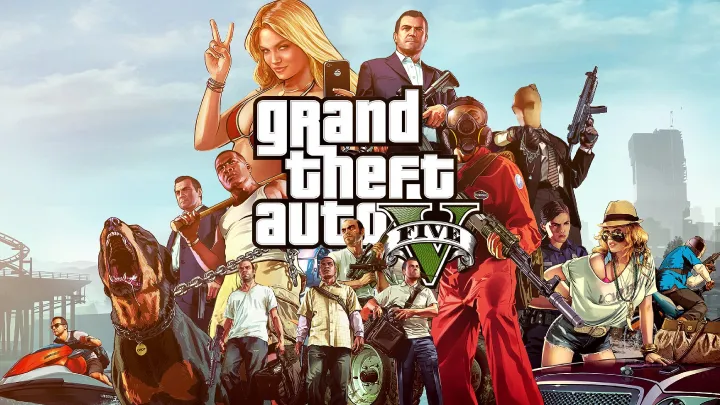
Grand Theft Auto V isn't simply a game; it is an economic, social, and cultural document of the 21st century. Taking the familiar chaotic sandbox of its predecessors, it expands it into a living, breathing world of San Andreas—teeming with meticulous detail and a biting, satirical wit. Whether you are pulled into its high-stakes criminal economy or its deep social simulation, GTA V delivers a profound and unforgettable masterclass in open-world design.
EA SPORTS FC™ 26
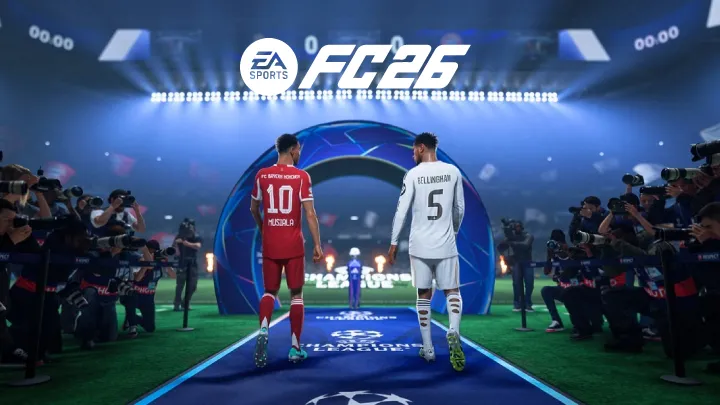
EA SPORTS FC™ 26 marks the third installment in the EA Sports FC era and is poised for release in September 2025. Developed by EA Vancouver and EA Romania, the game continues to showcase realism, player expression, and fidelity that fans expect—now with deeper gameplay variety and tactical richness. Covering multiple platforms—from next-gen consoles to PCs and even the new Nintendo Switch 2—FC 26 seeks to refine core mechanics while layering in strategic and narrative depth.
My Voice Zoo
MyVoiceZoo is a voice-focused platform/app designed to help users work with audio and voice-related tasks in a convenient, easy-to-use way. Instead of making everything complicated, MyVoiceZoo typically follows a simple workflow where users can get results faster, adjust key options, and reuse the tool for different voice needs. If you’re searching for a voice tool that feels practical and customization-friendly, MyVoiceZoo is worth considering.