Screenshot























The Outer Worlds 2 Summary
Introduction"The Outer Worlds 2" is the definitive sequel to Obsidian Entertainment's 2019 hit, marking a significant leap forward for the franchise. Released on October 29, 2025, the game moves away from the original's Halcyon system to the brand-new Arcadia star system. Published by Xbox Game Studios following Microsoft's acquisition of Obsidian, this installment is a showcase of what the studio can achieve with a higher budget and the power of Unreal Engine 5.In this sequel, players take on the role of an Earth Directorate agent (though your "competence" is entirely up to you) who awakens after a decade of stasis to find Arcadia on the brink of collapse. Unnatural "rifts" are tearing through space, and three major powers—the Protectorate, a religious scientific order, and a massive corporate invasion force—are fighting for control. This review explores why this title has become a benchmark for modern first-person RPGs. Publisher and Developer: The Obsidian-Xbox SynergyThe development of "The Outer Worlds 2" was led by Obsidian Entertainment, with legendary creators like Leonard Boyarsky and Tim Cain (original Fallout creators) providing their signature wit and design philosophy. As a flagship title for Xbox Game Studios, it launched day-and-date on Xbox Game Pass, reaching millions of players instantly across Xbox Series X|S, PC, and—in a surprising move for 2025—PlayStation 5.The transition to Xbox ownership provided the resources needed to expand the game's scope significantly. Unlike the first game’s "AA" feel, the sequel feels like a true "AAA" experience, featuring high-fidelity environments, motion-captured dialogue, and a much larger, more seamless world design that benefits from Microsoft's long-term investment in the studio.Dynamic Combat: Snappier, Weightier, and More CreativeRefined Gunplay and MobilityThe combat in Arcadia is a drastic improvement over the Halcyon days. Obsidian introduced enhanced mobility mechanics, including sliding and double-jumping, which make encounters feel faster and more vertical. The gunplay is "snappier," with a diverse arsenal ranging from standard ballistics to bizarre Science Weapons that can shrink enemies or swap their gravity.Tactical Time Dilation (TTD) 2.0The signature TTD system returns with new upgrades. Players can now "chain" effects more effectively, such as blinding one enemy while simultaneously crippling the limbs of another. This tactical layer ensures that while combat can be played as a standard shooter, it truly rewards those who invest in their character's mental attributes to manipulate the flow of time.The New Arcadia System: A Universe DividedBeyond HalcyonThe move to the Arcadia system allowed Obsidian to create more varied biomes. From the neon-soaked corporate skyscrapers of the Protectorate capital to the haunting, rift-torn landscapes of forgotten moons, each planet feels handcrafted rather than procedurally generated. This focus on "depth over width" avoids the pitfalls of empty space exploration seen in other recent titles.The Factional WarThe narrative is driven by three main factions:The Protectorate: The established, authoritarian government.The Order of the Ascendant: A rebellious group mixing religious zeal with advanced science.Auntie’s Choice & Corporations: The returning corporate satirization, now even more aggressive in their pursuit of privatizing the galaxy's rifts.Enhanced RPG Systems: Character Building and FlawsObsidian has doubled down on the "RPG with RPG elements." You can build your commander as a "disciple of diplomacy," a "crusader of chaos," or—the fan favorite—the "Dumb" build, which opens up unique, hilarious dialogue options.The Re-imagined Flaw SystemThe Flaw system is more nuanced in the sequel. Instead of just stat debuffs, flaws now offer interesting gameplay trade-offs. For example, taking the "Kleptomaniac" flaw might increase your stealth and pickpocketing speed, but your character will occasionally steal items automatically, potentially landing you in trouble with local guards when you least expect it. Companion Dynamics: More Than Just Combat PetsCompanions in "The Outer Worlds 2" are integral to the experience. Each has a unique "Approval" meter that reacts not just to your dialogue, but to your actions across the star system.No Romance, More Depth: While romance options are still absent (to the chagrin of some fans), the platonic relationships are deeper, with companions frequently arguing with each other or intervening in your negotiations based on their own moral compass.Combat Specials: Each crew member has a cinematic special ability that can be upgraded through their personal questlines, making them feel like true partners in your journey.Narrative Depth: Satire in the Age of RiftsThe writing remains the game's strongest suit. The satire of unfettered capitalism is as biting as ever, but the story is more "grounded" this time around. The threat of the Rifts adds a layer of cosmic horror to the corporate comedy, creating a tone that feels both hilarious and genuinely perilous. Your choices have "galaxy-altering" consequences, with the ending reflecting the subtle alliances you made throughout your 30-40 hour journey.Visuals and Audio: The Unreal Engine 5 Glow-upA Stylized FutureThe transition to Unreal Engine 5 has allowed for stunning lighting and "Lumen" reflections. The art style remains "vibrant retro-futurism," but with a level of detail that makes every terminal and piece of corporate propaganda pop.Auditory ImmersionThe audio design by Oleksa Lozowchuk features a score that blends orchestral grandeur with quirky, synth-heavy tracks. The spatial audio is particularly impressive, allowing players to track enemy movements through the creaking metal of derelict space stations.User Interface and Quality of LifeThe UI has been overhauled for 2025 standards. It’s minimalist but provides deep data when needed.Ping System: A robust system allows you to direct companions or highlight loot with ease.Cross-Save/Cross-Buy: Through the Xbox Play Anywhere initiative and the link between Battle.net and Xbox accounts, players can move between platforms seamlessly, a welcome feature for the modern gamer.Pros, Cons, and Expert RatingProsExceptional Writing: The best satirical RPG dialogue in years.Player Agency: Truly meaningful choices with multiple quest paths.Visual Identity: A unique, colorful aesthetic that stands out in a sea of "gritty" shooters.Satisfying Progression: The 12-skill system makes every level-up feel impactful.ConsTechnical Performance: Some frame-rate dips in "Quality Mode" on consoles.Enemy Variety: While improved, you’ll still fight many familiar "Raptidon" and robotic variants.Initial Pricing: The $80 RRP at launch caused significant community debate.Expert Rating: 8.5 / 10"The Outer Worlds 2 doesn't reinvent the wheel; it just builds a much better, more hilarious wheel and shoots it into a new galaxy. It’s a mandatory fun experience for any RPG fan."Future Prospects: 2026 and BeyondAs we move into 2026, Obsidian has already confirmed two major story DLCs for the "Arcadia" cycle. The development team is actively releasing "Title Updates" to address the initial bugs reported at launch. With the game being a staple of Game Pass, its longevity is secured, and the modding community is already beginning to flourish, promising years of additional content for this corporate dystopia.Conclusion: Your Galaxy, Your Way"The Outer Worlds 2" is more than just a sequel; it’s a refinement of everything that makes Obsidian a legendary developer. It manages to balance high-stakes sci-fi drama with a "middle-management" sense of humor that is uniquely its own. Whether you're a returning fan or a newcomer, the Arcadia system offers a rich, reactive world where your character—no matter how "dumb" or "brilliant"—is truly the center of the universe.
Rating
PROS
- ▶Exceptional Writing: The best satirical RPG dialogue in years.
- ▶Player Agency: Truly meaningful choices with multiple quest paths.
- ▶Visual Identity: A unique, colorful aesthetic that stands out in a sea of "gritty" shooters.
- ▶Satisfying Progression: The 12-skill system makes every level-up feel impactful.
CONS
- ▶Technical Performance: Some frame-rate dips in "Quality Mode" on consoles.
- ▶Enemy Variety: While improved, you’ll still fight many familiar "Raptidon" and robotic variants.
- ▶Initial Pricing: The $80 RRP at launch caused significant community debate.
Introduction
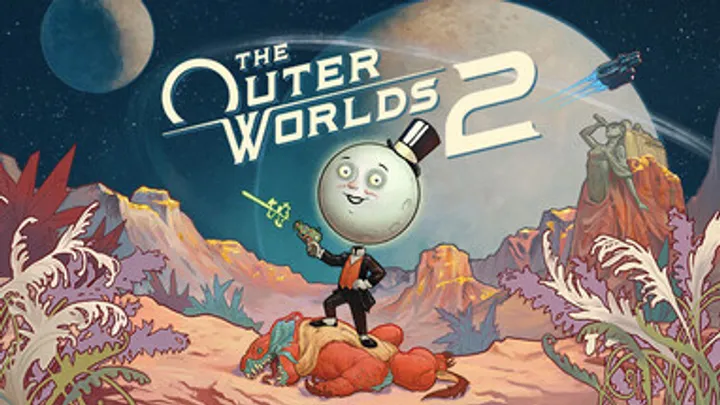
"The Outer Worlds 2" is the definitive sequel to Obsidian Entertainment's 2019 hit, marking a significant leap forward for the franchise. Released on October 29, 2025, the game moves away from the original's Halcyon system to the brand-new Arcadia star system. Published by Xbox Game Studios following Microsoft's acquisition of Obsidian, this installment is a showcase of what the studio can achieve with a higher budget and the power of Unreal Engine 5.
In this sequel, players take on the role of an Earth Directorate agent (though your "competence" is entirely up to you) who awakens after a decade of stasis to find Arcadia on the brink of collapse. Unnatural "rifts" are tearing through space, and three major powers—the Protectorate, a religious scientific order, and a massive corporate invasion force—are fighting for control. This review explores why this title has become a benchmark for modern first-person RPGs.
Publisher and Developer: The Obsidian-Xbox Synergy
The development of "The Outer Worlds 2" was led by Obsidian Entertainment, with legendary creators like Leonard Boyarsky and Tim Cain (original Fallout creators) providing their signature wit and design philosophy. As a flagship title for Xbox Game Studios, it launched day-and-date on Xbox Game Pass, reaching millions of players instantly across Xbox Series X|S, PC, and—in a surprising move for 2025—PlayStation 5.
The transition to Xbox ownership provided the resources needed to expand the game's scope significantly. Unlike the first game’s "AA" feel, the sequel feels like a true "AAA" experience, featuring high-fidelity environments, motion-captured dialogue, and a much larger, more seamless world design that benefits from Microsoft's long-term investment in the studio.
Dynamic Combat: Snappier, Weightier, and More Creative
Refined Gunplay and Mobility
The combat in Arcadia is a drastic improvement over the Halcyon days. Obsidian introduced enhanced mobility mechanics, including sliding and double-jumping, which make encounters feel faster and more vertical. The gunplay is "snappier," with a diverse arsenal ranging from standard ballistics to bizarre Science Weapons that can shrink enemies or swap their gravity.
Tactical Time Dilation (TTD) 2.0
The signature TTD system returns with new upgrades. Players can now "chain" effects more effectively, such as blinding one enemy while simultaneously crippling the limbs of another. This tactical layer ensures that while combat can be played as a standard shooter, it truly rewards those who invest in their character's mental attributes to manipulate the flow of time.
The New Arcadia System: A Universe Divided
Beyond Halcyon
The move to the Arcadia system allowed Obsidian to create more varied biomes. From the neon-soaked corporate skyscrapers of the Protectorate capital to the haunting, rift-torn landscapes of forgotten moons, each planet feels handcrafted rather than procedurally generated. This focus on "depth over width" avoids the pitfalls of empty space exploration seen in other recent titles.
The Factional War
The narrative is driven by three main factions:
- The Protectorate: The established, authoritarian government.
- The Order of the Ascendant: A rebellious group mixing religious zeal with advanced science.
- Auntie’s Choice & Corporations: The returning corporate satirization, now even more aggressive in their pursuit of privatizing the galaxy's rifts.
Enhanced RPG Systems: Character Building and Flaws
Obsidian has doubled down on the "RPG with RPG elements." You can build your commander as a "disciple of diplomacy," a "crusader of chaos," or—the fan favorite—the "Dumb" build, which opens up unique, hilarious dialogue options.
The Re-imagined Flaw System
The Flaw system is more nuanced in the sequel. Instead of just stat debuffs, flaws now offer interesting gameplay trade-offs. For example, taking the "Kleptomaniac" flaw might increase your stealth and pickpocketing speed, but your character will occasionally steal items automatically, potentially landing you in trouble with local guards when you least expect it.
Companion Dynamics: More Than Just Combat Pets
Companions in "The Outer Worlds 2" are integral to the experience. Each has a unique "Approval" meter that reacts not just to your dialogue, but to your actions across the star system.
- No Romance, More Depth: While romance options are still absent (to the chagrin of some fans), the platonic relationships are deeper, with companions frequently arguing with each other or intervening in your negotiations based on their own moral compass.
- Combat Specials: Each crew member has a cinematic special ability that can be upgraded through their personal questlines, making them feel like true partners in your journey.
Narrative Depth: Satire in the Age of Rifts
The writing remains the game's strongest suit. The satire of unfettered capitalism is as biting as ever, but the story is more "grounded" this time around. The threat of the Rifts adds a layer of cosmic horror to the corporate comedy, creating a tone that feels both hilarious and genuinely perilous. Your choices have "galaxy-altering" consequences, with the ending reflecting the subtle alliances you made throughout your 30-40 hour journey.
Visuals and Audio: The Unreal Engine 5 Glow-up
A Stylized Future
The transition to Unreal Engine 5 has allowed for stunning lighting and "Lumen" reflections. The art style remains "vibrant retro-futurism," but with a level of detail that makes every terminal and piece of corporate propaganda pop.
Auditory Immersion
The audio design by Oleksa Lozowchuk features a score that blends orchestral grandeur with quirky, synth-heavy tracks. The spatial audio is particularly impressive, allowing players to track enemy movements through the creaking metal of derelict space stations.
User Interface and Quality of Life
The UI has been overhauled for 2025 standards. It’s minimalist but provides deep data when needed.
- Ping System: A robust system allows you to direct companions or highlight loot with ease.
- Cross-Save/Cross-Buy: Through the Xbox Play Anywhere initiative and the link between Battle.net and Xbox accounts, players can move between platforms seamlessly, a welcome feature for the modern gamer.
Pros, Cons, and Expert Rating
Pros
- Exceptional Writing: The best satirical RPG dialogue in years.
- Player Agency: Truly meaningful choices with multiple quest paths.
- Visual Identity: A unique, colorful aesthetic that stands out in a sea of "gritty" shooters.
- Satisfying Progression: The 12-skill system makes every level-up feel impactful.
Cons
- Technical Performance: Some frame-rate dips in "Quality Mode" on consoles.
- Enemy Variety: While improved, you’ll still fight many familiar "Raptidon" and robotic variants.
- Initial Pricing: The $80 RRP at launch caused significant community debate.
Expert Rating: 8.5 / 10
"The Outer Worlds 2 doesn't reinvent the wheel; it just builds a much better, more hilarious wheel and shoots it into a new galaxy. It’s a mandatory fun experience for any RPG fan."
Future Prospects: 2026 and Beyond
As we move into 2026, Obsidian has already confirmed two major story DLCs for the "Arcadia" cycle. The development team is actively releasing "Title Updates" to address the initial bugs reported at launch. With the game being a staple of Game Pass, its longevity is secured, and the modding community is already beginning to flourish, promising years of additional content for this corporate dystopia.
Conclusion: Your Galaxy, Your Way
"The Outer Worlds 2" is more than just a sequel; it’s a refinement of everything that makes Obsidian a legendary developer. It manages to balance high-stakes sci-fi drama with a "middle-management" sense of humor that is uniquely its own. Whether you're a returning fan or a newcomer, the Arcadia system offers a rich, reactive world where your character—no matter how "dumb" or "brilliant"—is truly the center of the universe.
Get Game Links
All trademarks belong to their respective owners.
Latest Reviews

Gorilla Tag
When Gorilla Tag was first released by developer Another Axiom in early access back in early 2021, few could have predicted the meteoric rise it would enjoy. The concept was almost childishly simple: you play as a gorilla in VR, using only your arms to move, jump, and climb, and the core game mode is… tag. That’s it. No complicated weapon systems. No sprawling maps with scripted events. No ultra-realistic graphics or heavy lore drops. Instead, it’s an unapologetically low-poly, physics-driven playground where movement is the mechanic.And yet, this stripped-down design has transformed Gorilla Tag from an experimental indie project into one of the most popular VR multiplayer games of all time. It’s a case study in how constraints can inspire innovation — and how social interaction, player creativity, and unconventional mechanics can create a phenomenon that defies traditional AAA wisdom.In this review, I’ll dissect Gorilla Tag from the perspective of a games analyst, covering its movement system, game design philosophy, social dynamics, competitive meta, community growth, technical execution, monetization strategy, and the future potential of the title. I’ll also touch on its cultural footprint and what it means for the VR industry as a whole.

Bloody Finger Jump
Is your finger faster then the others? Will your finger crush other enemies? Take up the challenge, compete and check how fast your fingers are. You can be sure that there will be blood...
Grand Theft Auto V
Grand Theft Auto V isn't simply a game; it is an economic, social, and cultural document of the 21st century. Taking the familiar chaotic sandbox of its predecessors, it expands it into a living, breathing world of San Andreas—teeming with meticulous detail and a biting, satirical wit. Whether you are pulled into its high-stakes criminal economy or its deep social simulation, GTA V delivers a profound and unforgettable masterclass in open-world design.
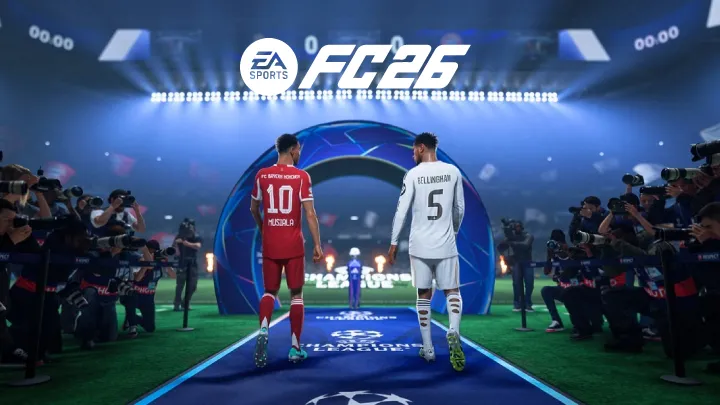
EA SPORTS FC™ 26
EA SPORTS FC™ 26 marks the third installment in the EA Sports FC era and is poised for release in September 2025. Developed by EA Vancouver and EA Romania, the game continues to showcase realism, player expression, and fidelity that fans expect—now with deeper gameplay variety and tactical richness. Covering multiple platforms—from next-gen consoles to PCs and even the new Nintendo Switch 2—FC 26 seeks to refine core mechanics while layering in strategic and narrative depth.
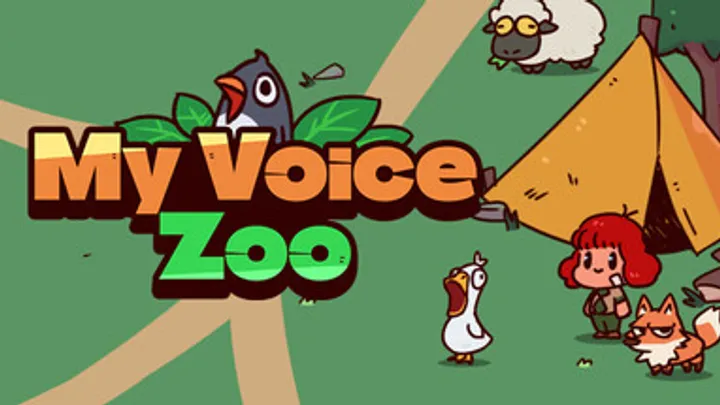
My Voice Zoo
MyVoiceZoo is a voice-focused platform/app designed to help users work with audio and voice-related tasks in a convenient, easy-to-use way. Instead of making everything complicated, MyVoiceZoo typically follows a simple workflow where users can get results faster, adjust key options, and reuse the tool for different voice needs. If you’re searching for a voice tool that feels practical and customization-friendly, MyVoiceZoo is worth considering.