Screenshot













Summary
IntroductionFew games blur the line between video game and social platform as dramatically as VRChat. Launched in early access in 2017, VRChat has grown from a niche experiment into one of the most recognizable virtual spaces on the internet. While not a “game” in the traditional sense, VRChat provides a sprawling sandbox where players can embody avatars, build custom worlds, attend events, and create social connections that rival real-life interactions.Unlike titles that rely on structured missions or progression, VRChat’s appeal lies in its open-ended freedom. It is part metaverse, part social hub, and part creative platform. Players can be anything from an anime character in a futuristic nightclub to a giant robot in a medieval tavern. With millions of user-generated worlds and avatars, VRChat has become less about pre-scripted design and more about the communities that inhabit it.As we dive into this review, it’s important to frame VRChat not as a typical video game, but as a social ecosystem where creativity and connection take center stage.Narrative & CharactersUnlike narrative-driven games with central plots, VRChat thrives on player-driven stories. The characters in VRChat are not written by developers—they are the people who log in daily, each adopting avatars and roles that reflect, parody, or exaggerate aspects of themselves.Avatars as IdentityThe avatar system is at the heart of VRChat’s character experience. Players can import 3D models from Unity or choose from countless community-made creations. From cartoon mascots to photorealistic humanoids, these avatars allow for personal expression that goes far beyond cosmetic customization in most games.For some, avatars become alternate identities, complete with unique mannerisms, voices, and in-world reputations. For others, they’re simply playful costumes to switch depending on the mood. This freedom means that VRChat narratives are often improvised, emergent, and deeply personal.Roleplay & Social DramaWhile VRChat does not have scripted campaigns, roleplaying communities flourish. Entire groups dedicate themselves to living out stories—whether it’s running a virtual café, reenacting fantasy adventures, or even simulating slice-of-life anime high schools. These narratives are ephemeral yet powerful, creating bonds that last outside of VRChat itself.World & AtmosphereIf avatars are the characters, then worlds are the stages on which VRChat stories unfold.Endless Variety of WorldsVRChat supports player-created worlds built with Unity. This has led to a staggering library: neon-soaked cyberpunk cities, cozy cabins in snowy mountains, abstract art installations, sprawling fantasy kingdoms, and replicas of real-world landmarks. Unlike static maps in traditional games, VRChat’s worlds are constantly expanding thanks to community contributions.Atmosphere Through Social EnergyAtmosphere in VRChat is not just about graphics or sound—it’s about the people. A quiet world becomes lively once players fill it with conversation, music, or impromptu games. This makes VRChat feel more like a living party than a structured play space. The vibe shifts dramatically depending on the world chosen and the crowd present.Events & GatheringsOver time, VRChat has become host to large-scale events: virtual raves, comedy shows, talk panels, speed dating sessions, and even weddings. These events highlight how VRChat functions as a cultural hub, transcending its initial role as a novelty VR app.Gameplay SystemsCalling VRChat a “game” is tricky because it lacks objectives, win conditions, or leveling systems. Instead, its “gameplay” emerges from interaction and creativity.Core MechanicsMovement & Interaction: VRChat supports both desktop and VR modes. In VR, players can use tracked hand movements for gestures, high-fives, hugs, or more elaborate interactions.Voice Communication: Spatialized voice chat gives conversations a sense of proximity, making interactions feel natural.Avatar Features: Avatars can include custom animations, physics, and interactive elements. For example, some avatars have working smartphones, particle effects, or even mini-games built into them.Mini-Games & RoleplayWhile VRChat itself doesn’t impose structured gameplay, countless worlds feature mini-games: murder mystery, capture the flag, kart racing, and even rhythm-based challenges. These provide variety for players who want more than casual chatting.Creation & ModdingPerhaps the most significant “gameplay system” is creation. Using Unity and the VRChat SDK, users can design their own avatars and worlds, which others can then explore. This blurs the line between player and developer, empowering the community to drive the platform’s evolution.Technical AmbitionVRChat may not boast cutting-edge graphics comparable to AAA games, but its technical ambition lies elsewhere: social presence and scalability.Graphics & PerformanceWorld quality varies wildly depending on the creator. Some are optimized, running smoothly even on modest PCs, while others are dense and demanding. VRChat’s visual ceiling is limited by the Unity engine, but artistry often makes up for technical limitations.VR IntegrationVRChat shines brightest in full VR, where hand tracking, gesture recognition, and room-scale movement create unparalleled immersion. Hugging a friend or waving goodbye in VR feels substantially different from pressing a button in a flat-screen game.Networking & ScaleThe game supports large lobbies, though stability can be inconsistent with bigger crowds. Voice processing, avatar rendering, and physics synchronization all present ongoing challenges. Yet, the fact that VRChat can host massive events with hundreds of users remains impressive.Safety & ModerationOne technical and social hurdle is moderation. With its open nature, VRChat has struggled with trolling, harassment, and inappropriate avatars. The developers have introduced tools like mute, block, safety settings, and user trust ranks, but moderation remains a continuous balancing act.StrengthsUnmatched Social Freedom: Players can interact in ways no traditional game allows, from casual hangouts to full-blown performances.Creative Community: User-generated content keeps VRChat fresh, ensuring endless variety.Immersion in VR: Few platforms replicate the sense of presence VRChat offers.Cross-Platform Access: Playable both in VR and desktop mode, making it accessible to a wider audience.Cultural Significance: VRChat has birthed memes, viral moments, and even communities that spill into real life.Weaknesses & ConcernsSteep Learning Curve: Setting up avatars and worlds can be confusing for newcomers.Inconsistent Performance: Optimizations vary depending on user-generated content.Toxicity & Safety: Trolling and harassment are common issues, especially in public lobbies.Lack of Structured Gameplay: Some players may find the lack of objectives unsatisfying.Moderation Struggles: Developers face an ongoing challenge in balancing freedom with safety.Community ReceptionVRChat’s community is both its greatest strength and its biggest challenge.Popularity & GrowthThe game exploded in popularity around 2018, largely thanks to Twitch and YouTube trends (like “Ugandan Knuckles”). Since then, it has stabilized into a dedicated base of millions of active users.Diverse CommunitiesFrom anime fans to musicians, educators to comedians, VRChat has carved niches for countless subcultures. This diversity is unmatched in most online games.CriticismAt the same time, the game faces criticism for inconsistent moderation, exposure of minors to inappropriate content, and the potential for addictive use. Critics argue VRChat can be overwhelming without proper guidance or private friend groups.Final VerdictVRChat is not a traditional video game. It is a social platform, creative canvas, and cultural phenomenon wrapped into one. For some, it is a place to laugh with strangers, roleplay with friends, or attend virtual concerts. For others, it is a daily escape—a digital third place where identity and imagination take center stage.Its strengths lie in its community-driven content and the unparalleled immersion of VR. Its weaknesses stem from the very same openness that makes it special: moderation struggles, inconsistent quality, and a lack of structured goals.For players seeking tight gameplay loops, VRChat will feel aimless. But for those who want a space to connect, create, and experience the unexpected, it offers something no other platform does. VRChat may not be the future of the metaverse, but it is certainly one of the most vibrant experiments shaping it today.
Rating
Introduction
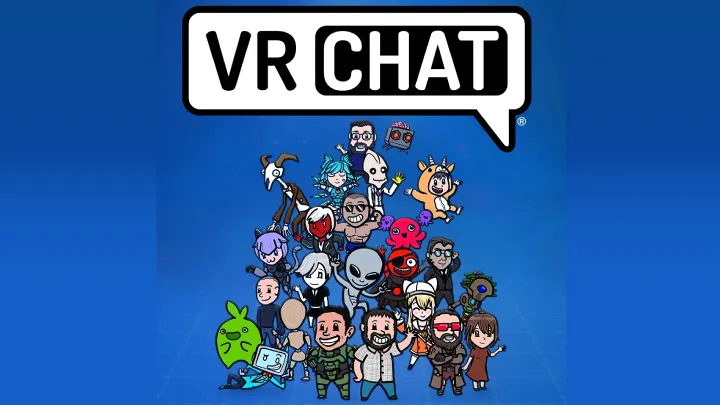
Few games blur the line between video game and social platform as dramatically as VRChat. Launched in early access in 2017, VRChat has grown from a niche experiment into one of the most recognizable virtual spaces on the internet. While not a “game” in the traditional sense, VRChat provides a sprawling sandbox where players can embody avatars, build custom worlds, attend events, and create social connections that rival real-life interactions.
Unlike titles that rely on structured missions or progression, VRChat’s appeal lies in its open-ended freedom. It is part metaverse, part social hub, and part creative platform. Players can be anything from an anime character in a futuristic nightclub to a giant robot in a medieval tavern. With millions of user-generated worlds and avatars, VRChat has become less about pre-scripted design and more about the communities that inhabit it.
As we dive into this review, it’s important to frame VRChat not as a typical video game, but as a social ecosystem where creativity and connection take center stage.
Narrative & Characters
Unlike narrative-driven games with central plots, VRChat thrives on player-driven stories. The characters in VRChat are not written by developers—they are the people who log in daily, each adopting avatars and roles that reflect, parody, or exaggerate aspects of themselves.
Avatars as Identity
The avatar system is at the heart of VRChat’s character experience. Players can import 3D models from Unity or choose from countless community-made creations. From cartoon mascots to photorealistic humanoids, these avatars allow for personal expression that goes far beyond cosmetic customization in most games.
For some, avatars become alternate identities, complete with unique mannerisms, voices, and in-world reputations. For others, they’re simply playful costumes to switch depending on the mood. This freedom means that VRChat narratives are often improvised, emergent, and deeply personal.
Roleplay & Social Drama
While VRChat does not have scripted campaigns, roleplaying communities flourish. Entire groups dedicate themselves to living out stories—whether it’s running a virtual café, reenacting fantasy adventures, or even simulating slice-of-life anime high schools. These narratives are ephemeral yet powerful, creating bonds that last outside of VRChat itself.
World & Atmosphere
If avatars are the characters, then worlds are the stages on which VRChat stories unfold.
Endless Variety of Worlds
VRChat supports player-created worlds built with Unity. This has led to a staggering library: neon-soaked cyberpunk cities, cozy cabins in snowy mountains, abstract art installations, sprawling fantasy kingdoms, and replicas of real-world landmarks. Unlike static maps in traditional games, VRChat’s worlds are constantly expanding thanks to community contributions.
Atmosphere Through Social Energy
Atmosphere in VRChat is not just about graphics or sound—it’s about the people. A quiet world becomes lively once players fill it with conversation, music, or impromptu games. This makes VRChat feel more like a living party than a structured play space. The vibe shifts dramatically depending on the world chosen and the crowd present.
Events & Gatherings
Over time, VRChat has become host to large-scale events: virtual raves, comedy shows, talk panels, speed dating sessions, and even weddings. These events highlight how VRChat functions as a cultural hub, transcending its initial role as a novelty VR app.
Gameplay Systems
Calling VRChat a “game” is tricky because it lacks objectives, win conditions, or leveling systems. Instead, its “gameplay” emerges from interaction and creativity.
Core Mechanics
- Movement & Interaction: VRChat supports both desktop and VR modes. In VR, players can use tracked hand movements for gestures, high-fives, hugs, or more elaborate interactions.
- Voice Communication: Spatialized voice chat gives conversations a sense of proximity, making interactions feel natural.
- Avatar Features: Avatars can include custom animations, physics, and interactive elements. For example, some avatars have working smartphones, particle effects, or even mini-games built into them.
Mini-Games & Roleplay
While VRChat itself doesn’t impose structured gameplay, countless worlds feature mini-games: murder mystery, capture the flag, kart racing, and even rhythm-based challenges. These provide variety for players who want more than casual chatting.
Creation & Modding
Perhaps the most significant “gameplay system” is creation. Using Unity and the VRChat SDK, users can design their own avatars and worlds, which others can then explore. This blurs the line between player and developer, empowering the community to drive the platform’s evolution.
Technical Ambition
VRChat may not boast cutting-edge graphics comparable to AAA games, but its technical ambition lies elsewhere: social presence and scalability.
Graphics & Performance
World quality varies wildly depending on the creator. Some are optimized, running smoothly even on modest PCs, while others are dense and demanding. VRChat’s visual ceiling is limited by the Unity engine, but artistry often makes up for technical limitations.
VR Integration
VRChat shines brightest in full VR, where hand tracking, gesture recognition, and room-scale movement create unparalleled immersion. Hugging a friend or waving goodbye in VR feels substantially different from pressing a button in a flat-screen game.
Networking & Scale
The game supports large lobbies, though stability can be inconsistent with bigger crowds. Voice processing, avatar rendering, and physics synchronization all present ongoing challenges. Yet, the fact that VRChat can host massive events with hundreds of users remains impressive.
Safety & Moderation
One technical and social hurdle is moderation. With its open nature, VRChat has struggled with trolling, harassment, and inappropriate avatars. The developers have introduced tools like mute, block, safety settings, and user trust ranks, but moderation remains a continuous balancing act.
Strengths
- Unmatched Social Freedom: Players can interact in ways no traditional game allows, from casual hangouts to full-blown performances.
- Creative Community: User-generated content keeps VRChat fresh, ensuring endless variety.
- Immersion in VR: Few platforms replicate the sense of presence VRChat offers.
- Cross-Platform Access: Playable both in VR and desktop mode, making it accessible to a wider audience.
- Cultural Significance: VRChat has birthed memes, viral moments, and even communities that spill into real life.
Weaknesses & Concerns
- Steep Learning Curve: Setting up avatars and worlds can be confusing for newcomers.
- Inconsistent Performance: Optimizations vary depending on user-generated content.
- Toxicity & Safety: Trolling and harassment are common issues, especially in public lobbies.
- Lack of Structured Gameplay: Some players may find the lack of objectives unsatisfying.
- Moderation Struggles: Developers face an ongoing challenge in balancing freedom with safety.
Community Reception
VRChat’s community is both its greatest strength and its biggest challenge.
Popularity & Growth
The game exploded in popularity around 2018, largely thanks to Twitch and YouTube trends (like “Ugandan Knuckles”). Since then, it has stabilized into a dedicated base of millions of active users.
Diverse Communities
From anime fans to musicians, educators to comedians, VRChat has carved niches for countless subcultures. This diversity is unmatched in most online games.
Criticism
At the same time, the game faces criticism for inconsistent moderation, exposure of minors to inappropriate content, and the potential for addictive use. Critics argue VRChat can be overwhelming without proper guidance or private friend groups.
Final Verdict
VRChat is not a traditional video game. It is a social platform, creative canvas, and cultural phenomenon wrapped into one. For some, it is a place to laugh with strangers, roleplay with friends, or attend virtual concerts. For others, it is a daily escape—a digital third place where identity and imagination take center stage.
Its strengths lie in its community-driven content and the unparalleled immersion of VR. Its weaknesses stem from the very same openness that makes it special: moderation struggles, inconsistent quality, and a lack of structured goals.
For players seeking tight gameplay loops, VRChat will feel aimless. But for those who want a space to connect, create, and experience the unexpected, it offers something no other platform does. VRChat may not be the future of the metaverse, but it is certainly one of the most vibrant experiments shaping it today.
Get Game Links
All trademarks belong to their respective owners.
Latest Reviews
Gorilla Tag
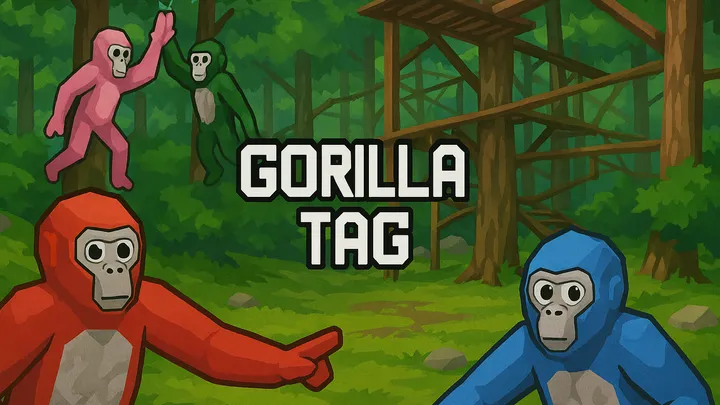
When Gorilla Tag was first released by developer Another Axiom in early access back in early 2021, few could have predicted the meteoric rise it would enjoy. The concept was almost childishly simple: you play as a gorilla in VR, using only your arms to move, jump, and climb, and the core game mode is… tag. That’s it. No complicated weapon systems. No sprawling maps with scripted events. No ultra-realistic graphics or heavy lore drops. Instead, it’s an unapologetically low-poly, physics-driven playground where movement is the mechanic.And yet, this stripped-down design has transformed Gorilla Tag from an experimental indie project into one of the most popular VR multiplayer games of all time. It’s a case study in how constraints can inspire innovation — and how social interaction, player creativity, and unconventional mechanics can create a phenomenon that defies traditional AAA wisdom.In this review, I’ll dissect Gorilla Tag from the perspective of a games analyst, covering its movement system, game design philosophy, social dynamics, competitive meta, community growth, technical execution, monetization strategy, and the future potential of the title. I’ll also touch on its cultural footprint and what it means for the VR industry as a whole.

Bloody Finger Jump
Is your finger faster then the others? Will your finger crush other enemies? Take up the challenge, compete and check how fast your fingers are. You can be sure that there will be blood...
Grand Theft Auto V
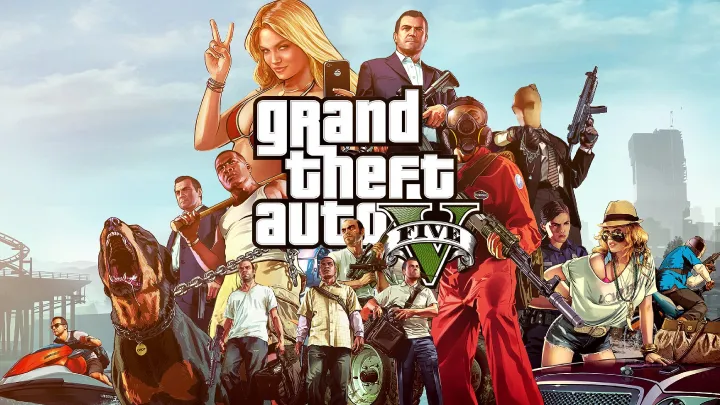
Grand Theft Auto V isn't simply a game; it is an economic, social, and cultural document of the 21st century. Taking the familiar chaotic sandbox of its predecessors, it expands it into a living, breathing world of San Andreas—teeming with meticulous detail and a biting, satirical wit. Whether you are pulled into its high-stakes criminal economy or its deep social simulation, GTA V delivers a profound and unforgettable masterclass in open-world design.
EA SPORTS FC™ 26
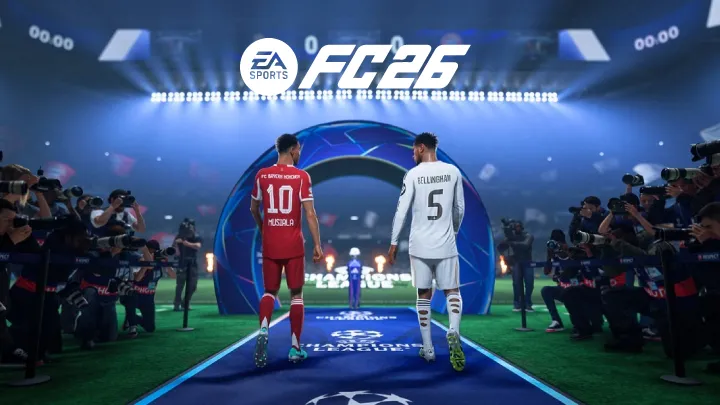
EA SPORTS FC™ 26 marks the third installment in the EA Sports FC era and is poised for release in September 2025. Developed by EA Vancouver and EA Romania, the game continues to showcase realism, player expression, and fidelity that fans expect—now with deeper gameplay variety and tactical richness. Covering multiple platforms—from next-gen consoles to PCs and even the new Nintendo Switch 2—FC 26 seeks to refine core mechanics while layering in strategic and narrative depth.
My Voice Zoo
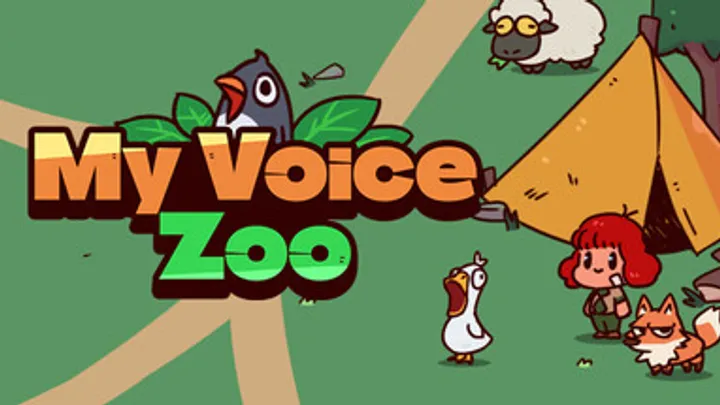
MyVoiceZoo is a voice-focused platform/app designed to help users work with audio and voice-related tasks in a convenient, easy-to-use way. Instead of making everything complicated, MyVoiceZoo typically follows a simple workflow where users can get results faster, adjust key options, and reuse the tool for different voice needs. If you’re searching for a voice tool that feels practical and customization-friendly, MyVoiceZoo is worth considering.
melon sandbox
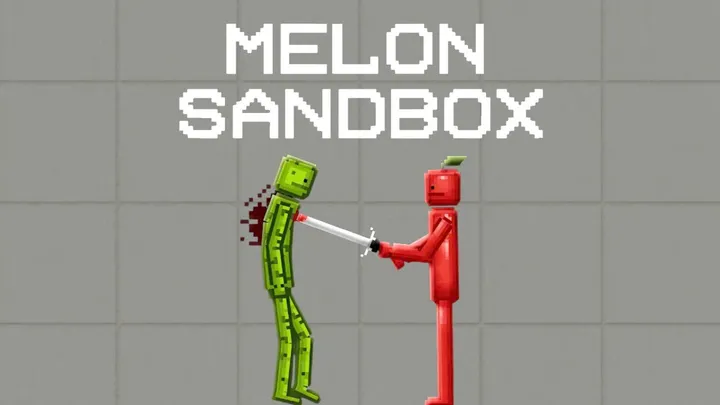
Melon Sandbox is a chaotic, physics-based sandbox game where creativity meets destruction. While it’s primarily known as a single-player playground, you can imagine it as a chaotic, physics-based multiplayer co-op game (up to 4 players) focused on emergency response, developed by ArtDock—a concept that reflects the game’s unpredictable and experimental nature. In reality, it offers a free-form environment where players build, test, and destroy without limits using ragdoll physics and a wide range of tools.Core FeaturesOverall GameplayOpen-ended sandbox with no missions, rules, or objectivesFocus on experimentation, creativity, and physics-based interactionsRagdoll characters that react realistically to damage and environmentGame FeaturesMassive arsenal of weapons, tools, explosives, and vehiclesDrag-and-drop system to create custom scenarios easilyMultiple maps (city, desert, lab, etc.) for different experimentsRealistic physics engine with dynamic reactions and chain effectsModding and customization options for extended creativityStrengthsExtremely high creative freedom with no restrictionsFun and unpredictable physics interactionsWide variety of items and tools to experiment withEasy-to-use interface suitable for casual playHigh replayability due to endless possibilitiesWeaknessesLack of structured gameplay (no story, missions, or progression)Can become repetitive after extended play sessionsContains violent/gore elements not suitable for all playersPerformance issues or lag on some devicesAds and monetization can affect user experience (reported by players)ConclusionMelon Sandbox delivers a wildly creative and chaotic playground where players are free to experiment without limits. Its physics-based interactions and diverse toolset make it highly entertaining, especially for those who enjoy sandbox-style games. However, the lack of structured objectives and occasional performance issues may reduce long-term engagement. Overall, it’s a fun, creativity-driven experience best suited for casual play and experimentation rather than goal-oriented gameplay.