




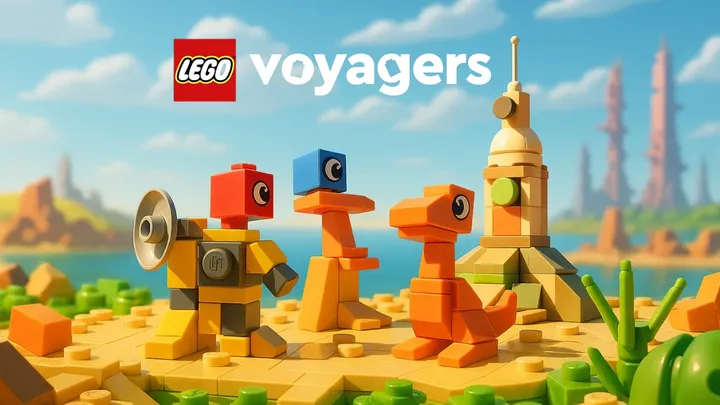
LEGO® Voyagers
IntroductionReleased on September 15, 2025, LEGO® Voyagers is the latest brick filled journey from Light Brick Studio, published by Annapurna Interactive. Available on PlayStation 5, Xbox Series X|S, Nintendo Switch, and PC, this cooperative adventure lets players step into the shoes of two minifigures stranded in a mysterious LEGO universe. Priced at $29.99 for the Standard Edition and $39.99 for the Deluxe Edition (which includes bonus levels), the game invites players to repair their crashed spaceship, rebuild broken worlds, and rediscover the joy of creativity together.First revealed at Summer Game Fest 2025 and later tested through community demos, the game immediately caught attention for its charming blend of exploration and building. Early impressions highlight its heartfelt co-op spirit and inventive mechanics, though some players noted its relatively short runtime and technical hiccups. This review takes a closer look at its storytelling, worlds, gameplay systems, technical performance, and community reception to see if LEGO® Voyagers earns its place as a standout family friendly LEGO title.Narrative & StorytellingAt its heart, LEGO® Voyagers tells a story about friendship, teamwork, and discovery. Players guide two stranded minifigures as they journey through strange biomes, solving puzzles and piecing their ship back together. The narrative unfolds lightly through dialogue snippets, environmental cues, and shared player actions, keeping the focus on cooperation rather than scripted drama.Memorable moments like building a vehicle together or improvising a creative solution to a hazard capture the essence of LEGO play. The humor is gentle, the tone upbeat, and the overarching theme of rebuilding broken worlds adds a meaningful touch.That said, the story avoids complexity. Those hoping for a layered, cinematic narrative may find it shallow. Instead, its charm lies in emergent storytelling, the shared laughter when a puzzle solution clicks, or the thrill of discovering a hidden mechanic. For players who embrace its simplicity, the game offers a wholesome, brick by brick adventure.World & EnvironmentsThe game’s backdrop is a procedurally generated LEGO multiverse, where every session feels fresh. From alien landscapes and derelict space stations to the claustrophobic interiors of crashed ships, the environments brim with color and blocky creativity.Each level mixes exploration with interactivity. Rotating platforms, hidden brick caches, vehicle assembly stations, and puzzle gates ensure variety. Sound design complements this with cheerful music, satisfying brick clinks, and witty minifigure chatter, enhancing the sense of immersion. Visual touches like exploding bricks, shifting colors, and dynamic landscapes add playful flair.The trade off is scope. Levels are bite sized rather than expansive, designed for quick bursts of creativity instead of a persistent open world. While this format suits younger players and families, some may find the transitions and frequent loading screens break the flow. Still, the imaginative environments capture the LEGO spirit, rewarding curiosity with vibrant surprises.Gameplay MechanicsCore LoopLEGO® Voyagers thrives on a rhythm of exploration, collection, and construction. In 20 to 40 minute play sessions, players gather bricks, solve puzzles, and build structures or vehicles to push forward. This loop encourages experimentation and ensures that no two runs feel quite the same.Co-op ChallengesThe game’s biggest strength lies in two player cooperation. Whether it’s platforming across hazards, coordinating brick placement, or tackling layered puzzles, the mechanics constantly reinforce teamwork. Some puzzles may feel uneven, too simple for seasoned players or too tricky for kids, but when balanced they offer rewarding collaboration.Modes & ExtrasBeyond the Story Campaign, players can dive into Free Build mode, compete in LEGO races, or test their creativity with vehicle customization. While leaderboards and unlocks add replayability, puzzle difficulty and occasional desynchronization issues suggest room for refinement.Progression & MultiplayerProgression feels rewarding without overwhelming complexity. Collecting bricks unlocks new minifigures, cosmetic upgrades, and fresh worlds, blending cosmetic joy with gameplay utility.Multiplayer is strictly 2 player local co-op, emphasizing face to face collaboration. The lack of online support is a notable omission, particularly in an age where remote play is common. Still, for families or couch co-op enthusiasts, it delivers a highly engaging shared experience.Technical ExecutionVisually, the game nails the LEGO aesthetic with crisp animations, dynamic lighting, and whimsical effects that keep everything lively. Performance across platforms is solid, though not flawless. Clipping issues, occasional crashes, and long loading times can disrupt immersion.Audio adds personality with its upbeat soundtrack and interactive soundscape, though repeated loops grow tiring in extended sessions. Controls are responsive and intuitive, whether on gamepads or keyboard, though touch support is absent.Post launch patches, including a notable October 2025 co-op stability update, have improved performance. Yet, the game still needs polish to reach its full technical potential.Community FeedbackThe LEGO® Voyagers community has embraced the game’s imagination first approach. Players share creative builds and speedrun challenges in community hubs, celebrating the fun of exploration and teamwork. Positive feedback highlights its building tools, cooperative design, and charming worlds.However, concerns linger over technical stability, puzzle balance, and content depth. Some players want faster load times, easier puzzle options for kids, or more robust endgame content. DLC pricing has also sparked debate, though excitement for upcoming expansions like new worlds and minifigure packs remains high.Overall, community engagement has been strong, with feedback actively shaping updates and keeping the game’s momentum alive.Final VerdictLEGO® Voyagers captures the magic of LEGO by blending cooperation, creativity, and humor into a family friendly adventure. Its vibrant worlds, engaging building mechanics, and emphasis on teamwork make it a standout couch co-op title.Yet, it’s not without flaws. Technical glitches, uneven puzzle difficulty, and limited multiplayer options hold it back from greatness. With ongoing updates, however, the foundation is strong for future improvements.For families, friends, and LEGO fans seeking a whimsical, creative co-op journey, LEGO® Voyagers is well worth the trip, even if you’ll need some patience as the developers iron out the bumps.
Popular Now




Introduction
Released on September 15, 2025, LEGO® Voyagers is the latest brick filled journey from Light Brick Studio, published by Annapurna Interactive. Available on PlayStation 5, Xbox Series X|S, Nintendo Switch, and PC, this cooperative adventure lets players step into the shoes of two minifigures stranded in a mysterious LEGO universe. Priced at $29.99 for the Standard Edition and $39.99 for the Deluxe Edition (which includes bonus levels), the game invites players to repair their crashed spaceship, rebuild broken worlds, and rediscover the joy of creativity together.
First revealed at Summer Game Fest 2025 and later tested through community demos, the game immediately caught attention for its charming blend of exploration and building. Early impressions highlight its heartfelt co-op spirit and inventive mechanics, though some players noted its relatively short runtime and technical hiccups. This review takes a closer look at its storytelling, worlds, gameplay systems, technical performance, and community reception to see if LEGO® Voyagers earns its place as a standout family friendly LEGO title.
Narrative & Storytelling
At its heart, LEGO® Voyagers tells a story about friendship, teamwork, and discovery. Players guide two stranded minifigures as they journey through strange biomes, solving puzzles and piecing their ship back together. The narrative unfolds lightly through dialogue snippets, environmental cues, and shared player actions, keeping the focus on cooperation rather than scripted drama.
Memorable moments like building a vehicle together or improvising a creative solution to a hazard capture the essence of LEGO play. The humor is gentle, the tone upbeat, and the overarching theme of rebuilding broken worlds adds a meaningful touch.
That said, the story avoids complexity. Those hoping for a layered, cinematic narrative may find it shallow. Instead, its charm lies in emergent storytelling, the shared laughter when a puzzle solution clicks, or the thrill of discovering a hidden mechanic. For players who embrace its simplicity, the game offers a wholesome, brick by brick adventure.
World & Environments
The game’s backdrop is a procedurally generated LEGO multiverse, where every session feels fresh. From alien landscapes and derelict space stations to the claustrophobic interiors of crashed ships, the environments brim with color and blocky creativity.
Each level mixes exploration with interactivity. Rotating platforms, hidden brick caches, vehicle assembly stations, and puzzle gates ensure variety. Sound design complements this with cheerful music, satisfying brick clinks, and witty minifigure chatter, enhancing the sense of immersion. Visual touches like exploding bricks, shifting colors, and dynamic landscapes add playful flair.
The trade off is scope. Levels are bite sized rather than expansive, designed for quick bursts of creativity instead of a persistent open world. While this format suits younger players and families, some may find the transitions and frequent loading screens break the flow. Still, the imaginative environments capture the LEGO spirit, rewarding curiosity with vibrant surprises.
Gameplay Mechanics
Core Loop
LEGO® Voyagers thrives on a rhythm of exploration, collection, and construction. In 20 to 40 minute play sessions, players gather bricks, solve puzzles, and build structures or vehicles to push forward. This loop encourages experimentation and ensures that no two runs feel quite the same.
Co-op Challenges
The game’s biggest strength lies in two player cooperation. Whether it’s platforming across hazards, coordinating brick placement, or tackling layered puzzles, the mechanics constantly reinforce teamwork. Some puzzles may feel uneven, too simple for seasoned players or too tricky for kids, but when balanced they offer rewarding collaboration.
Modes & Extras
Beyond the Story Campaign, players can dive into Free Build mode, compete in LEGO races, or test their creativity with vehicle customization. While leaderboards and unlocks add replayability, puzzle difficulty and occasional desynchronization issues suggest room for refinement.
Progression & Multiplayer
Progression feels rewarding without overwhelming complexity. Collecting bricks unlocks new minifigures, cosmetic upgrades, and fresh worlds, blending cosmetic joy with gameplay utility.
Multiplayer is strictly 2 player local co-op, emphasizing face to face collaboration. The lack of online support is a notable omission, particularly in an age where remote play is common. Still, for families or couch co-op enthusiasts, it delivers a highly engaging shared experience.
Technical Execution
Visually, the game nails the LEGO aesthetic with crisp animations, dynamic lighting, and whimsical effects that keep everything lively. Performance across platforms is solid, though not flawless. Clipping issues, occasional crashes, and long loading times can disrupt immersion.
Audio adds personality with its upbeat soundtrack and interactive soundscape, though repeated loops grow tiring in extended sessions. Controls are responsive and intuitive, whether on gamepads or keyboard, though touch support is absent.
Post launch patches, including a notable October 2025 co-op stability update, have improved performance. Yet, the game still needs polish to reach its full technical potential.
Community Feedback
The LEGO® Voyagers community has embraced the game’s imagination first approach. Players share creative builds and speedrun challenges in community hubs, celebrating the fun of exploration and teamwork. Positive feedback highlights its building tools, cooperative design, and charming worlds.
However, concerns linger over technical stability, puzzle balance, and content depth. Some players want faster load times, easier puzzle options for kids, or more robust endgame content. DLC pricing has also sparked debate, though excitement for upcoming expansions like new worlds and minifigure packs remains high.
Overall, community engagement has been strong, with feedback actively shaping updates and keeping the game’s momentum alive.
Final Verdict
LEGO® Voyagers captures the magic of LEGO by blending cooperation, creativity, and humor into a family friendly adventure. Its vibrant worlds, engaging building mechanics, and emphasis on teamwork make it a standout couch co-op title.
Yet, it’s not without flaws. Technical glitches, uneven puzzle difficulty, and limited multiplayer options hold it back from greatness. With ongoing updates, however, the foundation is strong for future improvements.
For families, friends, and LEGO fans seeking a whimsical, creative co-op journey, LEGO® Voyagers is well worth the trip, even if you’ll need some patience as the developers iron out the bumps.
Latest Reviews

Gorilla Tag
When Gorilla Tag was first released by developer Another Axiom in early access back in early 2021, few could have predicted the meteoric rise it would enjoy. The concept was almost childishly simple: you play as a gorilla in VR, using only your arms to move, jump, and climb, and the core game mode is… tag. That’s it. No complicated weapon systems. No sprawling maps with scripted events. No ultra-realistic graphics or heavy lore drops. Instead, it’s an unapologetically low-poly, physics-driven playground where movement is the mechanic.And yet, this stripped-down design has transformed Gorilla Tag from an experimental indie project into one of the most popular VR multiplayer games of all time. It’s a case study in how constraints can inspire innovation — and how social interaction, player creativity, and unconventional mechanics can create a phenomenon that defies traditional AAA wisdom.In this review, I’ll dissect Gorilla Tag from the perspective of a games analyst, covering its movement system, game design philosophy, social dynamics, competitive meta, community growth, technical execution, monetization strategy, and the future potential of the title. I’ll also touch on its cultural footprint and what it means for the VR industry as a whole.

Bloody Finger Jump
Is your finger faster then the others? Will your finger crush other enemies? Take up the challenge, compete and check how fast your fingers are. You can be sure that there will be blood...

Grand Theft Auto V
Grand Theft Auto V isn't simply a game; it is an economic, social, and cultural document of the 21st century. Taking the familiar chaotic sandbox of its predecessors, it expands it into a living, breathing world of San Andreas—teeming with meticulous detail and a biting, satirical wit. Whether you are pulled into its high-stakes criminal economy or its deep social simulation, GTA V delivers a profound and unforgettable masterclass in open-world design.