



Lost & Found: The Boring Game
IntroductionDeveloped by BRAVEBITS PTE. LTD., Lost & Found: The Boring Game puts players behind the hectic desk of a lost & found clerk at a major international airport. Launched in mid-2025 for Android, it's a minimalist yet lively simulation that transforms a typically tedious task into fast-paced, moral-gray fun. Players sort items from a conveyor belt and decide whether to return them, pocket them, or flip them on the black market—all while managing a caseload and an evolving workspace.Core Gameplay LoopSorting Mechanics: Items (sunglasses, toys, gadgets, even mysterious valuables) flow by on a conveyor belt. Players must process them quickly to avoid overload.Moral Choices: Each item can be returned for a tip, discarded, or sold illegally. The choice affects both survival and moral standing.Customer Interactions: Travelers range from anxious parents to scheming scammers, influencing whether you’re patient or pressured.Time Pressure: The conveyor accelerates as days go on, demanding speed and sharp decisions.Progression SystemsUpgrades: Purchase better shelves, tools, and security gear to handle greater volume and improve sorting efficiency.Workspace Customization: Customize your desk and tools to match your playstyle — whether careful honesty or opportunistic greed.Playstyle Divergence: Choose between a morally upright career path or a risky but profitable black market route.Design & PresentationAccessibility First: Tap-and-swipe controls keep the game easy to pick up and perfect for short mobile sessions.Visual Clarity: Color-coded items, simple graphics, and clean animations provide clarity under pressure.Thematic Humor: Dialogue and customer designs inject whimsical humor into the daily grind, preserving a casual and playful tone.StrengthsClarity & Accessibility: Ideal for on-the-go sessions with an inviting interface.Moral Flexibility: The “honest clerk vs. corrupt profiteer” dynamic adds depth and replayability.Progress Feels Rewarding: Upgrading the office space enhances both mechanics and personal expression.Humorous Tone: Light-hearted, engaging writing keeps the task from feeling monotonous.Perfect Pacing for Mobile: Commutes, coffee breaks, or quick downtime—this game fits well into daily pockets of time.WeaknessesLimited Depth: Once upgrades are maxed, the loop may feel repetitive without new mechanics.Ad Presence: Contains ads, which may interrupt immersion for some players.Sparse Reviews & Early Stage: Low download numbers and lack of ratings suggest the game is still finding its audience.No Multiplayer or Social Layer: Interaction is strictly solo, which may limit engagement for social players.Platform Limitation: Currently Android-only, potentially missing broader audience niches.Community FeedbackReddit Remarks: Some players mention the pace can be overwhelming; casual or "chill" difficulty settings help balance feel.Softonic Notes: Described as a casual, quirky blend of sorting tasks and strategic choices—inviting for short play sessions and creative decision-making.ConclusionLost & Found: The Boring Game stands out by turning a mundane scenario into a motivator for fast, strategic decision-making with a dash of moral ambiguity. It’s a tidy, clever concept that’s a great fit for mobile-friendly, casual gaming—especially for those drawn to hybrid simulation and narrative play. While still early in its lifecycle, its light-hearted charm and upgrade incentives make it a surprisingly satisfying grind.
Popular Now




Introduction
Developed by BRAVEBITS PTE. LTD., Lost & Found: The Boring Game puts players behind the hectic desk of a lost & found clerk at a major international airport. Launched in mid-2025 for Android, it's a minimalist yet lively simulation that transforms a typically tedious task into fast-paced, moral-gray fun. Players sort items from a conveyor belt and decide whether to return them, pocket them, or flip them on the black market—all while managing a caseload and an evolving workspace.
Core Gameplay Loop
- Sorting Mechanics: Items (sunglasses, toys, gadgets, even mysterious valuables) flow by on a conveyor belt. Players must process them quickly to avoid overload.
- Moral Choices: Each item can be returned for a tip, discarded, or sold illegally. The choice affects both survival and moral standing.
- Customer Interactions: Travelers range from anxious parents to scheming scammers, influencing whether you’re patient or pressured.
- Time Pressure: The conveyor accelerates as days go on, demanding speed and sharp decisions.
Progression Systems
- Upgrades: Purchase better shelves, tools, and security gear to handle greater volume and improve sorting efficiency.
- Workspace Customization: Customize your desk and tools to match your playstyle — whether careful honesty or opportunistic greed.
- Playstyle Divergence: Choose between a morally upright career path or a risky but profitable black market route.
Design & Presentation
- Accessibility First: Tap-and-swipe controls keep the game easy to pick up and perfect for short mobile sessions.
- Visual Clarity: Color-coded items, simple graphics, and clean animations provide clarity under pressure.
- Thematic Humor: Dialogue and customer designs inject whimsical humor into the daily grind, preserving a casual and playful tone.
Strengths
- Clarity & Accessibility: Ideal for on-the-go sessions with an inviting interface.
- Moral Flexibility: The “honest clerk vs. corrupt profiteer” dynamic adds depth and replayability.
- Progress Feels Rewarding: Upgrading the office space enhances both mechanics and personal expression.
- Humorous Tone: Light-hearted, engaging writing keeps the task from feeling monotonous.
- Perfect Pacing for Mobile: Commutes, coffee breaks, or quick downtime—this game fits well into daily pockets of time.
Weaknesses
- Limited Depth: Once upgrades are maxed, the loop may feel repetitive without new mechanics.
- Ad Presence: Contains ads, which may interrupt immersion for some players.
- Sparse Reviews & Early Stage: Low download numbers and lack of ratings suggest the game is still finding its audience.
- No Multiplayer or Social Layer: Interaction is strictly solo, which may limit engagement for social players.
- Platform Limitation: Currently Android-only, potentially missing broader audience niches.
Community Feedback
- Reddit Remarks: Some players mention the pace can be overwhelming; casual or "chill" difficulty settings help balance feel.
- Softonic Notes: Described as a casual, quirky blend of sorting tasks and strategic choices—inviting for short play sessions and creative decision-making.
Conclusion
Lost & Found: The Boring Game stands out by turning a mundane scenario into a motivator for fast, strategic decision-making with a dash of moral ambiguity. It’s a tidy, clever concept that’s a great fit for mobile-friendly, casual gaming—especially for those drawn to hybrid simulation and narrative play. While still early in its lifecycle, its light-hearted charm and upgrade incentives make it a surprisingly satisfying grind.
Latest Reviews

Gorilla Tag
When Gorilla Tag was first released by developer Another Axiom in early access back in early 2021, few could have predicted the meteoric rise it would enjoy. The concept was almost childishly simple: you play as a gorilla in VR, using only your arms to move, jump, and climb, and the core game mode is… tag. That’s it. No complicated weapon systems. No sprawling maps with scripted events. No ultra-realistic graphics or heavy lore drops. Instead, it’s an unapologetically low-poly, physics-driven playground where movement is the mechanic.And yet, this stripped-down design has transformed Gorilla Tag from an experimental indie project into one of the most popular VR multiplayer games of all time. It’s a case study in how constraints can inspire innovation — and how social interaction, player creativity, and unconventional mechanics can create a phenomenon that defies traditional AAA wisdom.In this review, I’ll dissect Gorilla Tag from the perspective of a games analyst, covering its movement system, game design philosophy, social dynamics, competitive meta, community growth, technical execution, monetization strategy, and the future potential of the title. I’ll also touch on its cultural footprint and what it means for the VR industry as a whole.

Bloody Finger Jump
Is your finger faster then the others? Will your finger crush other enemies? Take up the challenge, compete and check how fast your fingers are. You can be sure that there will be blood...
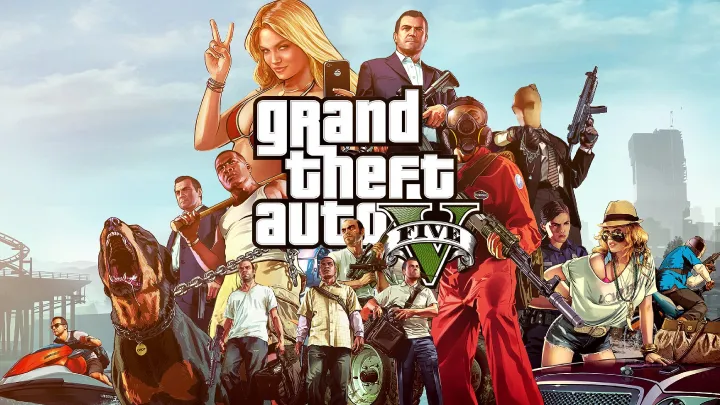
Grand Theft Auto V
Grand Theft Auto V isn't simply a game; it is an economic, social, and cultural document of the 21st century. Taking the familiar chaotic sandbox of its predecessors, it expands it into a living, breathing world of San Andreas—teeming with meticulous detail and a biting, satirical wit. Whether you are pulled into its high-stakes criminal economy or its deep social simulation, GTA V delivers a profound and unforgettable masterclass in open-world design.