





The Headliners
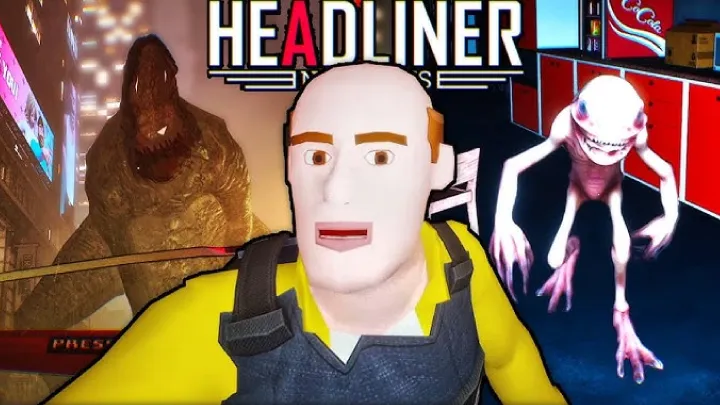
Introduction: The Price of a Front-Page ScoopIn the saturated market of co-op survival horror, The Headliners, developed and published by KAFI, emerged on December 21, 2024, as a refreshing and morbidly funny contender. While many titles focus on ghost hunting or resource gathering, The Headliners introduces a cynical, high-stakes objective: photojournalism in the heart of a supernatural quarantine zone. Players are not heroes; they are reckless freelancers equipped with cameras and a desperate need for a "viral" headline.Available on PC via Steam, the game quickly gained a cult following due to its unique premise. It isn't just about surviving; it's about staying close enough to the horror to get the perfect shot. Priced at $9.99, it balances intense atmospheric dread with chaotic multiplayer interactions, positioning itself as a must-play for fans of emergent horror gameplay.Narrative Design: Satire in the Face of ExtinctionThe narrative of The Headliners is delivered through environmental storytelling and a sharp sense of dark satire. Set in a city overrun by supernatural entities, the game world feels like an urban legend come to life. There is no heavy-handed cinematic campaign; instead, the story is told through the lens of the "Press Office"—your hub where you view your grim masterpieces and upgrade your equipment.The game effectively satirizes modern media's "if it bleeds, it leads" mentality. Your success is measured by the quality of your photos, with bonus points awarded for capturing moments of pure terror, teammate fatalities, or rare monstrous behaviors. This narrative framework justifies the reckless behavior of the players, turning every match into a self-contained story of greed and survival.World & Environments: The Anatomy of a Quarantined CityKAFI has done an exceptional job creating a visual style that feels both gritty and stylized. The maps are designed as "Extraction Zones," featuring abandoned subway tunnels, derelict apartment complexes, and foggy industrial districts. These are not static backgrounds; they are dynamic arenas where visibility is your greatest enemy.Environmental Dynamics:Light and Shadow: Since you rely on a camera flash, lighting plays a dual role: it reveals the monster but also exposes your position.Proximity Audio: The use of spatial 3D voice chat is crucial. Hearing a teammate’s scream cut off abruptly in the distance adds an unparalleled layer of tension to the urban exploration.Core Gameplay Mechanics: The Perfect ShotThe core loop of The Headliners revolves around a high-risk, high-reward cycle. Each expedition lasts roughly 10 to 15 minutes, pushing players to meet a "Headline Point Threshold" before the monsters become too overwhelmed to handle.The Gameplay Cycle:Deployment: Teams enter the zone with limited film and stamina.Investigation: Players must find and "trigger" monster encounters to get high-value photos.The "Death Bonus": In a brilliant twist of game design, photographing a teammate being attacked or killed provides the highest score multipliers, encouraging "toxic" but hilarious decision-making.Extraction: Reaching the van with your camera intact is the only way to cash in your points.On-Field Mechanics: Cameras, Flash, and Survival GearUnlike traditional shooters, your primary "weapon" is a DSLR Camera. Managing your camera settings—specifically your flash and film—is the difference between a high-paying scoop and a quick death.Essential Gear List:Professional Flash: Temporarily stuns light-sensitive monsters but consumes massive battery.Tripods: Used for setting up "death traps" to capture footage while the player stays safe.Traps & Decoys: Items used to lure monsters into specific poses or locations for "action shots."Thermal Film: Necessary for capturing invisible or ethereal entities that regular film cannot see.Multiplayer Synergy: The 5-Player DynamicWhile the game can be played solo, it is balanced for a 5-player squad. The dynamic between five people creates the perfect amount of chaos—large enough to split into groups but small enough for a single monster to pick everyone off if they aren't careful.The cooperative aspect often devolves into competitive sabotage, as players vie for the best angle on a monster. This "semi-cooperative" tension is the secret sauce that keeps the gameplay loop from becoming repetitive. One player acts as the "Bait," another as the "Primary Photographer," and others handle lighting and security gear.Technical Execution: Visual Grit and PerformanceBuilt on a modern rendering pipeline, The Headliners excels in its use of volumetric fog and particle effects. The monsters are designed with a focus on "Uncanny Valley" aesthetics—moving in twitchy, unnatural ways that keep players on edge.Performance Breakdown:Animations: The character animations for being grabbed or attacked are visceral and detailed, enhancing the "photo value" of these moments.Optimization: While there were minor frame-pacing issues at launch, the 2025 updates have significantly polished the experience for mid-range PC hardware.UI/UX: The interface is minimalist, mimicking a camera's LCD screen, which keeps the player immersed in the journalistic theme.Progression and Customization: The Career PathAs players survive expeditions, they earn currency to upgrade their gear. The progression system is surprisingly deep, allowing for specialized "builds." You can focus on being a "Stealth Photographer" with silent film and camo, or a "Combat Journalist" with high-intensity flashes and defensive traps.Unlockables include:Lenses: Telephoto lenses for safe distance shooting vs. Wide-angle for chaotic close-ups.Press Cards: Tiered ranks that grant access to more dangerous, high-paying city sectors.Cosmetic Apparel: Gritty press vests, helmets, and camera skins.Conclusion: A Must-Buy for Horror EnthusiastsThe Headliners is more than just a Lethal Company clone; it is a smart, cynical, and terrifyingly fun evolution of the co-op horror genre. By forcing players to face the horror rather than run from it—all for the sake of a digital paycheck—KAFI has tapped into something truly special. If you have a group of four friends and ten dollars, this is the most fun you can have being terrified.
Popular Now



Introduction: The Price of a Front-Page Scoop
In the saturated market of co-op survival horror, The Headliners, developed and published by KAFI, emerged on December 21, 2024, as a refreshing and morbidly funny contender. While many titles focus on ghost hunting or resource gathering, The Headliners introduces a cynical, high-stakes objective: photojournalism in the heart of a supernatural quarantine zone. Players are not heroes; they are reckless freelancers equipped with cameras and a desperate need for a "viral" headline.
Available on PC via Steam, the game quickly gained a cult following due to its unique premise. It isn't just about surviving; it's about staying close enough to the horror to get the perfect shot. Priced at $9.99, it balances intense atmospheric dread with chaotic multiplayer interactions, positioning itself as a must-play for fans of emergent horror gameplay.
Narrative Design: Satire in the Face of Extinction
The narrative of The Headliners is delivered through environmental storytelling and a sharp sense of dark satire. Set in a city overrun by supernatural entities, the game world feels like an urban legend come to life. There is no heavy-handed cinematic campaign; instead, the story is told through the lens of the "Press Office"—your hub where you view your grim masterpieces and upgrade your equipment.
The game effectively satirizes modern media's "if it bleeds, it leads" mentality. Your success is measured by the quality of your photos, with bonus points awarded for capturing moments of pure terror, teammate fatalities, or rare monstrous behaviors. This narrative framework justifies the reckless behavior of the players, turning every match into a self-contained story of greed and survival.
World & Environments: The Anatomy of a Quarantined City
KAFI has done an exceptional job creating a visual style that feels both gritty and stylized. The maps are designed as "Extraction Zones," featuring abandoned subway tunnels, derelict apartment complexes, and foggy industrial districts. These are not static backgrounds; they are dynamic arenas where visibility is your greatest enemy.
Environmental Dynamics:
- Light and Shadow: Since you rely on a camera flash, lighting plays a dual role: it reveals the monster but also exposes your position.
- Proximity Audio: The use of spatial 3D voice chat is crucial. Hearing a teammate’s scream cut off abruptly in the distance adds an unparalleled layer of tension to the urban exploration.
Core Gameplay Mechanics: The Perfect Shot
The core loop of The Headliners revolves around a high-risk, high-reward cycle. Each expedition lasts roughly 10 to 15 minutes, pushing players to meet a "Headline Point Threshold" before the monsters become too overwhelmed to handle.
The Gameplay Cycle:
- Deployment: Teams enter the zone with limited film and stamina.
- Investigation: Players must find and "trigger" monster encounters to get high-value photos.
- The "Death Bonus": In a brilliant twist of game design, photographing a teammate being attacked or killed provides the highest score multipliers, encouraging "toxic" but hilarious decision-making.
- Extraction: Reaching the van with your camera intact is the only way to cash in your points.
On-Field Mechanics: Cameras, Flash, and Survival Gear
Unlike traditional shooters, your primary "weapon" is a DSLR Camera. Managing your camera settings—specifically your flash and film—is the difference between a high-paying scoop and a quick death.
Essential Gear List:
- Professional Flash: Temporarily stuns light-sensitive monsters but consumes massive battery.
- Tripods: Used for setting up "death traps" to capture footage while the player stays safe.
- Traps & Decoys: Items used to lure monsters into specific poses or locations for "action shots."
- Thermal Film: Necessary for capturing invisible or ethereal entities that regular film cannot see.
Multiplayer Synergy: The 5-Player Dynamic
While the game can be played solo, it is balanced for a 5-player squad. The dynamic between five people creates the perfect amount of chaos—large enough to split into groups but small enough for a single monster to pick everyone off if they aren't careful.
The cooperative aspect often devolves into competitive sabotage, as players vie for the best angle on a monster. This "semi-cooperative" tension is the secret sauce that keeps the gameplay loop from becoming repetitive. One player acts as the "Bait," another as the "Primary Photographer," and others handle lighting and security gear.
Technical Execution: Visual Grit and Performance
Built on a modern rendering pipeline, The Headliners excels in its use of volumetric fog and particle effects. The monsters are designed with a focus on "Uncanny Valley" aesthetics—moving in twitchy, unnatural ways that keep players on edge.
Performance Breakdown:
- Animations: The character animations for being grabbed or attacked are visceral and detailed, enhancing the "photo value" of these moments.
- Optimization: While there were minor frame-pacing issues at launch, the 2025 updates have significantly polished the experience for mid-range PC hardware.
- UI/UX: The interface is minimalist, mimicking a camera's LCD screen, which keeps the player immersed in the journalistic theme.
Progression and Customization: The Career Path
As players survive expeditions, they earn currency to upgrade their gear. The progression system is surprisingly deep, allowing for specialized "builds." You can focus on being a "Stealth Photographer" with silent film and camo, or a "Combat Journalist" with high-intensity flashes and defensive traps.
Unlockables include:
- Lenses: Telephoto lenses for safe distance shooting vs. Wide-angle for chaotic close-ups.
- Press Cards: Tiered ranks that grant access to more dangerous, high-paying city sectors.
- Cosmetic Apparel: Gritty press vests, helmets, and camera skins.
Conclusion: A Must-Buy for Horror Enthusiasts
The Headliners is more than just a Lethal Company clone; it is a smart, cynical, and terrifyingly fun evolution of the co-op horror genre. By forcing players to face the horror rather than run from it—all for the sake of a digital paycheck—KAFI has tapped into something truly special. If you have a group of four friends and ten dollars, this is the most fun you can have being terrified.
Latest Reviews

Gorilla Tag
When Gorilla Tag was first released by developer Another Axiom in early access back in early 2021, few could have predicted the meteoric rise it would enjoy. The concept was almost childishly simple: you play as a gorilla in VR, using only your arms to move, jump, and climb, and the core game mode is… tag. That’s it. No complicated weapon systems. No sprawling maps with scripted events. No ultra-realistic graphics or heavy lore drops. Instead, it’s an unapologetically low-poly, physics-driven playground where movement is the mechanic.And yet, this stripped-down design has transformed Gorilla Tag from an experimental indie project into one of the most popular VR multiplayer games of all time. It’s a case study in how constraints can inspire innovation — and how social interaction, player creativity, and unconventional mechanics can create a phenomenon that defies traditional AAA wisdom.In this review, I’ll dissect Gorilla Tag from the perspective of a games analyst, covering its movement system, game design philosophy, social dynamics, competitive meta, community growth, technical execution, monetization strategy, and the future potential of the title. I’ll also touch on its cultural footprint and what it means for the VR industry as a whole.

Bloody Finger Jump
Is your finger faster then the others? Will your finger crush other enemies? Take up the challenge, compete and check how fast your fingers are. You can be sure that there will be blood...
Grand Theft Auto V
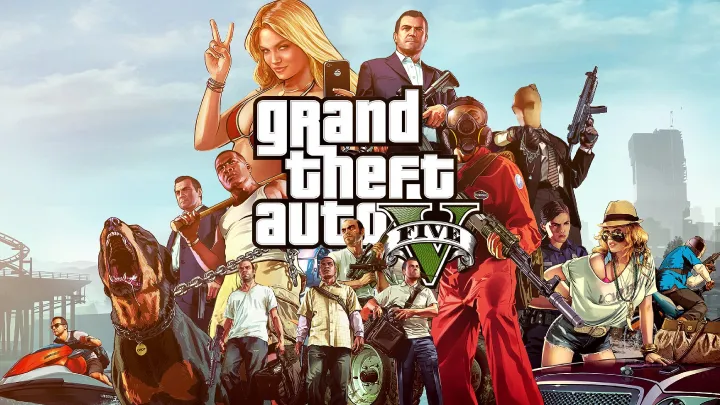
Grand Theft Auto V isn't simply a game; it is an economic, social, and cultural document of the 21st century. Taking the familiar chaotic sandbox of its predecessors, it expands it into a living, breathing world of San Andreas—teeming with meticulous detail and a biting, satirical wit. Whether you are pulled into its high-stakes criminal economy or its deep social simulation, GTA V delivers a profound and unforgettable masterclass in open-world design.